Event 1
Pate’s Murder
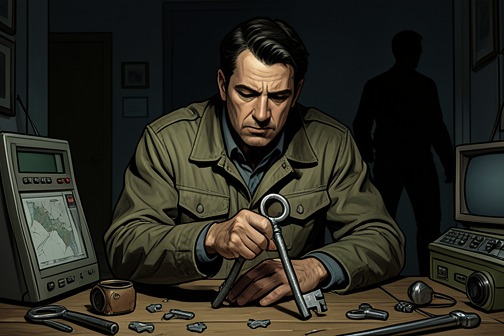
[Pate’s Murder](entity:event-recall-event-pate-s-murder-0be8a2c08da5) is the fatal conclusion of [Pate](entity:character-recall-character-pate-c509a2683505)’s exchange with an alchemist who has promised him a dragon coin. Pate believes he is completing a transaction: he has stolen an old black-iron key from Walgrave, receives the glittering coin, and expects the bargain to end. Instead, the stranger takes the key and leaves Pate dying in an alley. The event’s decisive significance lies in its reversal of value: Pate thinks he is gaining money and a future with Rosey, but the object he surrenders is the true prize, and the promised reward becomes the instrument of his destruction.
## The Theft That Creates the Bargain
Pate enters the exchange already compromised by theft. Inside Walgrave’s possessions he has found silver stags, a lock of yellow hair tied with a ribbon, a painted miniature, and a lobstered-steel knight’s gauntlet. When he shakes the gauntlet, the key falls onto the floor. The key is old, heavy, and made of black iron; Pate understands that it supposedly opens every door at the [Citadel](entity:location-recall-location-citadel-b473dfa394d2) and that only the archmaesters possess such keys. His first instinct is to recognize that taking it would make him a thief, but he picks it up anyway. He then turns back for the silver, reasoning that once he has crossed the moral boundary, the difference between stealing a little and stealing much no longer matters.
That decision supplies the murder’s immediate cause. Pate does not approach the alchemist with an innocent possession or an abstract promise; he brings the key because his hunger for the dragon coin has converted theft into a means of escape. The white ravens calling his name as he leaves intensify the scene’s sense of exposure, but they do not stop him. His movement away from the Citadel is therefore also movement away from the last chance to reverse his choice.
## The Exchange and Its False Reward
The bargain is conducted through guarded, suspicious dialogue. Pate asks the alchemist whether he has his dragon, and the alchemist answers that he will provide it if Pate has brought what is required. Pate insists on seeing the payment and does not intend to be cheated. The alchemist complies: the coin appears and walks across his knuckles, repeating the magical-looking display that accompanied Rosey’s introduction of the two men. In the morning light, the dragon glitters and casts a golden glow over the alchemist’s fingers.
Pate grabs the coin and tests it by biting down on it, imitating a gesture he has seen other men make because he is unsure what gold should taste like and does not want to appear foolish. The detail exposes both the immediacy of his desire and his insecurity. He has secured the object he came for, at least apparently, and treats the moment as proof that the transaction has succeeded. Yet the alchemist immediately asks for the key. The coin is the visible reward; the key is the concealed purpose of the exchange.
## The Alley and the Killing
When Pate asks who the stranger is, the man answers that he is a stranger and no one. Pate has no further words. Feeling light-headed and almost giddy, he draws out the key and places it in the stranger’s hand, reminding himself of Rosey and declaring that they are done. His eagerness to believe the exchange complete prevents him from recognizing that the alchemist has obtained the item that mattered most.
Pate has reached only halfway down the alley when the cobblestones begin to move beneath his feet. At first he tries to explain the sensation as slick, wet stones, but his body tells him otherwise: his heart hammers, his legs turn to water, and he asks what is happening because he does not understand. The stranger answers sadly that Pate never will. The reply converts uncertainty into finality. Pate’s lack of understanding is not merely a momentary failure to identify a poison or trick; it is the condition in which he dies.
The cobblestones rush upward to meet him. Pate attempts to cry for help, but his voice is failing as well. The killing is presented through bodily disintegration rather than an explicit explanation of the mechanism: the ground rises, his strength disappears, and speech is taken from him before life is taken altogether. The scene’s terror comes from the narrowing interval between ordinary movement and irreversible death. Pate has not reached safety, found Rosey, or enjoyed the coin; he collapses almost immediately after surrendering the key.
## Consequences and Narrative Meaning
Pate’s final thought is of Rosey. That ending gives the murder an emotional focus that the transaction itself lacks. The stolen key, the silver, the coin, and the alchemist’s concealed purpose belong to a world of calculated objects and exchanges, while Rosey represents the personal hope Pate carries into the bargain. His last thought shows that the theft was never only about possession: he imagined that the dragon coin might enable a different life, and death closes that possibility before it can be tested.
The event also establishes a pattern of deception. The alchemist appears to honor the agreement by producing the dragon and allowing Pate to examine it, but the performance directs attention toward the wrong object. Pate’s suspicion that he might be cheated is therefore ironically fulfilled in a deeper form: he receives what he requested while losing what the stranger truly wanted. The scene functions as a discovery for the reader even though Pate receives no usable recognition. The key’s value, the alchemist’s anonymity, and the unexplained collapse together reveal that Pate has been used rather than merely robbed.
As a tragedy, the murder turns on Pate’s own choice within an externally prepared trap. His theft of the archmaester’s key is the immediate act that makes the killing possible, but the alchemist controls the terms, the reward, and the timing. The value shift is absolute: Pate moves from anticipation of gain to helplessness, from imagined reunion with Rosey to physical ruin, and from speech to silence. His death therefore serves both as punishment for a desperate transgression and as evidence of a larger, more dangerous design that Pate is unable to comprehend before the alley takes him.
Event 2
Balon Greyjoy’s Death
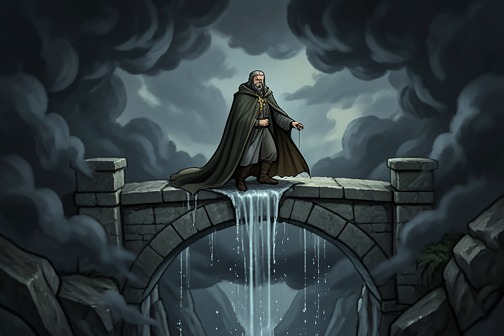
[Balon Greyjoy’s Death](entity:event-recall-event-balon-greyjoy-s-death-ec102656f8ad) is presented first as a terse announcement and then as a scene of political and religious interpretation. The king of the Iron Islands is said to have fallen from a bridge at [Pyke](entity:location-recall-location-pyke-62ace34d8cb0) and been dashed against the rocks below while a storm raged. His death removes the central figure of ironborn rule, breaks one of the two pillars supporting [Aeron Greyjoy](entity:character-recall-character-aeron-greyjoy-45b88728897f)’s life, and turns private grief into a summons to complete Balon’s unfinished work.
## The Announcement and Its Shock
The news reaches Aeron Greyjoy through horsemen who initially treat it as something to be spoken privately. The Sparr asks to address Damphair away from the others, but Aeron refuses the distinction: the men around him are his drowned men and servants of the [Drowned God](entity:concept-recall-concept-drowned-god-587befb96b94), and he claims to have no secrets from them or from the deity whose holy sea is beside him. The political disclosure therefore enters a religious space rather than a private chamber.
The messenger finally states the news in four plain words: the king is dead. The brevity of the declaration intensifies its force. Four kings exist in Westeros, yet Aeron immediately understands that the dead ruler must be [Balon Greyjoy](entity:character-recall-character-balon-greyjoy-ed069bd08355), because Balon alone rules the Iron Islands. The words overturn Aeron’s expectations. He had seen his eldest brother less than a moon’s turn earlier, after Balon returned from harrying the Stony Shore, and although Balon’s hair had become half-white and his shoulders had stooped more deeply, he had not appeared ill.
## Circumstances at Pyke
The reported manner of death is accidental in its immediate description but ominous in its setting. Balon Greyjoy was crossing a bridge at Pyke when he fell, striking the rocks below. The Greyjoy stronghold is built on a broken headland, with keeps and towers raised upon massive stone stacks thrusting out of the sea. Bridges bind those heights together: some are arched structures of carved stone, while others are precarious spans of hempen rope and wooden planks.
Aeron Greyjoy’s first response is to test the circumstances against the weather. He asks whether the storm was raging when Balon fell, and the youth confirms that it was. The storm thus becomes the immediate condition of the death and the basis for the explanation Aeron chooses. The physical geography of Pyke makes the fall brutally final: a king crossing between the stronghold’s separated heights is carried from a man-made passage into the sea-battered rocks beneath.
## Religious Meaning and Political Stakes
Aeron does not treat Balon’s death as a bare misfortune. He declares that the [Storm God](entity:concept-recall-concept-storm-god-5d3049d9d529) cast his brother down, drawing on the ironborn opposition between the sea that sustains them and the storms that bring woe and grief. In his account, the Drowned God gave the ironborn their origin and provided the fish that sustained them through winter, whereas the Storm God has always been their enemy. Balon’s achievement in making the ironborn great again is therefore recast as the reason for divine hostility: greatness provoked the storm’s wrath.
This interpretation converts death into confirmation of Balon’s mission rather than a repudiation of it. Aeron imagines Balon feasting in the Drowned God’s watery halls, attended by mermaids, while the survivors remain in a dry and dismal world. The living are not released from Balon’s project; they are charged with finishing it. Aeron immediately announces that he will speak with his lord father and asks the distance to [Hammerhorn](entity:location-recall-location-hammerhorn-3d18804aa3a8), turning mourning into movement and succession politics.
## Aeron Greyjoy’s Loss and Response
Balon’s death strikes Aeron with unusual personal force because Aeron has built his life upon two mighty pillars. The scene identifies one pillar as his brother and leaves the other as the Drowned God. When the news knocks the first down, Aeron declares that only the god remains and prays to be made as strong and tireless as the sea. His religious identity becomes the structure through which he absorbs the loss.
Aeron then asks directly how Balon died, refusing to leave the report at the level of an unexplained royal disappearance. Once he hears of the fall and the storm, he supplies a providential account and begins acting upon its implications. Even his journey toward Hammerhorn has an austere urgency. Offered a chance to ride with the messenger, he rejects the slower arrangement in favor of taking the horse alone, arguing that one rider can travel faster than two and invoking the Drowned God’s blessing. His response shows grief disciplined into purpose: Balon is dead, but the work associated with Balon’s rule must continue.
## Narrative Significance
The event is a threshold between an established reign and an unsettled future. Balon’s death is announced before the wider consequences are shown, but the announcement already changes the political field: the ruler of the Iron Islands is gone, the ironborn have lost the man who made them great again, and competing claims or projects can now gather around the vacant authority. The uncertainty of the physical account also matters. The scene gives a clear location, mechanism, and weather condition, yet Aeron’s insistence that the Storm God caused the fall supplies meaning rather than proof of intention.
The death consequently operates on two levels. As an event, it is a fall from a bridge at Pyke, ending Balon’s life against the rocks. As a narrative reversal, it destroys Aeron’s assumption that his brother was still present and stable, then redirects Aeron toward religiously sanctioned political action. The sea, the storm, the bridges, and the rocks join physical danger to questions of succession and divine judgment, making Balon Greyjoy’s Death the opening rupture through which the next struggle for the Iron Islands can emerge.
Event 3
The Kingsmoot
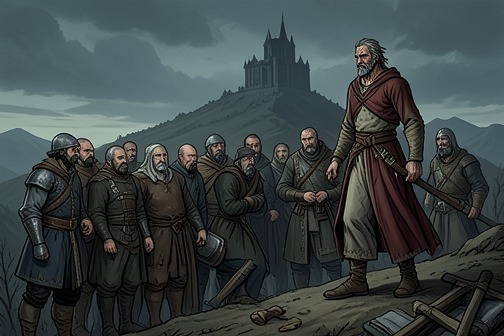
[The Kingsmoot](entity:event-recall-event-the-kingsmoot-dcc9419f65eb) is the ironborn assembly called at [Old Wyk](entity:location-recall-location-old-wyk-dcf01256b742) to choose a new king after [Balon Greyjoy](entity:character-recall-character-balon-greyjoy-ed069bd08355)’s death. [Aeron Greyjoy](entity:character-recall-character-aeron-greyjoy-45b88728897f) invokes it as both a sacred obligation and a political remedy: the ironborn must return to the ancient practice of raising the worthiest ruler rather than submitting to a godless claimant. Yet the gathering’s promise of communal choice is steadily overwhelmed by spectacle, rivalry, wealth, and [Euron Greyjoy](entity:character-recall-character-euron-greyjoy-7b02c582af38)’s apocalyptic vision of conquest, leaving Aeron’s faith shaken even before the assembly’s decision is complete.
## Origins and Sacred Authority
Aeron’s summons begins with a rejection of every alternative center of power. He insists that the Seastone Chair belongs neither to himself nor to Euron, because the [Drowned God](entity:concept-recall-concept-drowned-god-587befb96b94) has made him a prophet rather than a king and, in Aeron’s interpretation, forbids any godless man from sitting upon the chair. He therefore directs the captains and kings away from [Pyke](entity:location-recall-location-pyke-62ace34d8cb0), where they might bow before Euron, and away from Harlaw, which he associates with political scheming. Their destination is Old Wyk, specifically Nagga’s Hill and the bones of the Grey King’s Hall, the sacred place where a worthy king is to be chosen.
Aeron presents the kingsmoot as a recovery of an older political order. He recalls that the ironborn once chose their own kings and names Urras Ironfoot, Sylas Flatnose, Harrag Hoare, and the Old Kraken as rulers raised by such assemblies. The practice, he argues, is not an innovation but a return to the Old Way, the tradition that once made the ironborn powerful. His repeated summons turns religious exhortation into political mobilization: the captains are called from halls, hovels, castles, and keeps, and the choice of a king is framed as an act demanded by the Drowned God himself.
The assembly is also shaped by a theology of death and return. At the gathering, Aeron announces that Balon has died after the [Storm God](entity:concept-recall-concept-storm-god-5d3049d9d529) cast him down, but immediately transforms that death into a promise that an iron king will rise again. The formula that the dead rise harder and stronger binds Balon’s memory to the succession struggle. The new ruler is not merely to inherit a chair; he is expected to continue Balon’s defense of ironborn freedom, religion, and the iron price.
## The Gathering at Nagga’s Hill
The summons draws together a socially broad crowd. Oarsmen, steersmen, sailmakers, shipwrights, warriors, and fishermen gather around the knoll, while thralls, children, and women remain toward the rear. Captains and kings climb the slopes, among them Sigfry Stonetree, Andrik the Unsmiling, Ser Harras Harlaw, Baelor Blacktyde, the Stonehouse, and [Victarion Greyjoy](entity:character-recall-character-victarion-greyjoy-d1d762311d7f). The setting places ordinary ironborn beneath the political elite, but it also makes their presence part of the assembly’s noisy public authority.
Aeron controls the opening through ritual and speech. When he raises his hands, kettledrums, warhorns, cudgels, and voices fall silent, leaving only the waves. He announces Balon’s death, praises Balon as brave, blessed, and twice-crowned, and declares that another iron king must rise. The words do not simply describe succession; they summon the crowd into a shared religious and political act. The drowned men answer him, and the sea’s continuing roar becomes the sound against which the legitimacy of the new order is measured.
The ceremony then becomes a sequence of competing claims. Dunstan Drumm’s presentation begins well, but his long account of Drumm history and the modest gifts in his chests exhaust the captains’ patience. Aeron reads the crowd’s restlessness as the moment for Victarion. He presents Victarion as the strongest and most fearless of Quellon Greyjoy’s sons, and Victarion kneels to receive a blessing of seawater before declaring his candidacy.
## The Claims of Victarion and Asha
Victarion’s platform is a promise of continuity. He offers no elaborate rhetoric, openly admitting that he has no singer’s tongue and presenting instead his axe, his mailed hands, and his record of service. He recalls that Balon sent him to retrieve his bride, lead longships into battle, attack Lannisport, and prepare to destroy the Young Wolf should the opportunity arise. His claim is therefore grounded in loyalty, military experience, and the assurance that under him the ironborn will receive more of what they received under Balon.
Material generosity reinforces Victarion’s martial appeal. His champions display the Greyjoy banner, while his chests release silver, gold, gems, and plunder. The captains rush to seize the richest pieces as his supporters chant his name. The scene exposes the kingsmoot’s double nature: it is a religious assembly dedicated to choosing the worthiest ruler, but it is also an arena in which wealth can purchase attention and allegiance.
[Asha Greyjoy](entity:character-recall-character-asha-greyjoy-cb5055bcb3d0) interrupts the acclamation with wit rather than force. She whistles sharply, calls Victarion her uncle, and turns his armor and supposed limitations into jokes that make the crowd laugh. Her mockery does not deny his bravery or strength; instead, it converts those virtues into evidence that he is unsuited to rule. She points to his lack of sons, the deaths of his wives, Euron’s seniority, and her own claim as Balon’s daughter. Her intervention demonstrates that public authority at the kingsmoot depends not only on lineage or warfare but also on the ability to command a crowd’s attention.
Asha’s own promise is deliberately smaller and more practical than Euron’s. She offers peace and suggests that the ironborn should not pretend they can hold the North, much less conquer the entire realm. Her argument is immediately challenged by the scale of Euron’s ambition, but it exposes the central strategic question of the assembly: whether victory means preserving a defensible foothold or risking everything for total conquest.
## Euron’s Conquest and the Dragon Horn
Euron Greyjoy transforms the contest by offering an empire rather than a limited inheritance. He argues that the ironborn were once conquerors whose writ extended wherever the waves were heard. Against Victarion’s cold North and Asha’s restrained peace, he promises Lannisport, [Highgarden](entity:location-recall-location-highgarden-bbb664f18f6e), the Arbor, [Oldtown](entity:location-recall-location-oldtown-909d382b43db), the riverlands, the Reach, the kingswood, the rainwood, Dorne, the marches, the Mountains of the Moon, the Vale of Arryn, Tarth, and the Stepstones. His proposal is not a defense of Balon’s gains but a plan to take Westeros entire.
The boldness of the promise briefly overwhelms even Aeron. The priest has imagined a similar sweeping conquest in the past, with the green lands overrun and the religions of the mainland destroyed. That moment of recognition gives Euron’s speech its danger: the Crow’s Eye does not merely oppose Aeron’s dream; he gives it a more violent and apparently more achievable form.
Euron’s decisive advantage is the dragon horn. He claims to have found it in the smoking ruins of Valyria, a place he says no other man dared to enter. The horn is bound with red gold and [Valyrian steel](entity:concept-recall-concept-valyrian-steel-5ac196572640) engraved with enchantments, and Euron declares that it can bind dragons to the will of the ironmen. Asha dismisses the claim because dragons are believed extinct, but Euron counters that three remain and that he knows where to find them. The horn therefore converts an extravagant political promise into a supernatural claim to military power.
The crowd responds not to proof but to spectacle, possibility, and distribution. The mutes and mongrels from the Silence open Euron’s chests and spill his gifts before the captains and kings. Gold passes into their hands while the cry for Euron swells from scattered shouts into a roar rolling up Nagga’s Hill. The gifts function as political evidence within the assembly: wealth demonstrates reach, and the promise of dragons makes that reach seem limitless.
## Crisis and Significance
The kingsmoot’s central reversal occurs in Aeron himself. He has summoned the assembly believing that the Drowned God will reveal a godly king and that Victarion can defeat Euron’s godlessness. As Euron’s name is shouted by a thousand voices, however, Aeron reaches inward for divine guidance and finds only silence. The religious framework that gave the gathering legitimacy cannot guarantee its outcome, and the prophet who seemed certain at the beginning is left hearing only the imagined scream of a rusted iron hinge.
The event thus dramatizes the unstable boundary between sacred election and political manipulation. Aeron invokes ancient custom, holy geography, ritual silence, seawater, and the authority of the Drowned God. Victarion relies on martial history and plunder. Asha uses ridicule, lineage, and strategic restraint. Euron combines imperial promise, spectacular gifts, and the dragon horn. Each candidate translates a different kind of power into public persuasion, and the kingsmoot becomes a contest over which version of ironborn identity will govern the future.
Its significance lies in the contrast between the Old Way as remembered and the Old Way as performed. Aeron imagines a return to an honorable, godly tradition in which the worthiest ruler is raised by collective choice. The actual gathering reveals a harsher political reality: memory can be used as a weapon, ritual can magnify ambition, and the crowd can be moved by gold and impossible promises. The kingsmoot begins as Aeron’s attempt to restore sacred order, but Euron’s intervention turns it into the threshold of a far more dangerous transformation.
Event 4
Tommen and Margaery’s Wedding
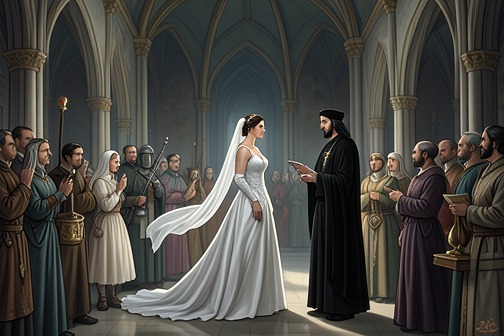
[Tommen and Margaery’s Wedding](entity:event-recall-event-tommen-and-margaery-s-w-d205c0341d1a) is both a marriage and a political settlement. Conducted in the [Red Keep](entity:location-recall-location-red-keep-df1aebb0ddc9)’s royal sept with fewer than a hundred witnesses, it gives King Tommen a new queen and strengthens the Tyrell presence at court, but it does not reconcile the people who must inhabit that arrangement. Margaery enters the ceremony as a graceful bride and calculating political presence, while [Cersei Lannister](entity:character-recall-character-cersei-lannister-666bd8aa8550) remains in mourning and reads every detail of the ritual as evidence that her authority and her dead son’s memory are being displaced.
## Political Background
The marriage follows a contested dynastic landscape in which marriage, regional law, and royal succession are inseparable. In Dorne, Tyene argues that [Myrcella Baratheon](entity:character-recall-character-myrcella-baratheon-110f9c16b8a2) is older than her brother and therefore the lawful heir under Dornish law. That claim rests on the settlement made when King Daeron married Princess Myriah: Dorne retained its own inheritance law, even after joining the realm. Elsewhere, however, the principle that a son comes before a daughter is presented as the established rule, and the Seven Kingdoms has never had a ruling queen. The dispute shows why Tommen’s marriage matters beyond personal union: the monarchy’s legitimacy is being argued through incompatible legal traditions.
The historical memory of succession makes the wedding still more politically charged. The example of the first Viserys and his daughter Rhaenyra demonstrates that a father’s declared intention may not survive the intervention of powerful institutions. When Viserys lay dying, Ser Criston Cole, the Lord Commander of the [Kingsguard](entity:organization-recall-organization-kingsguard-d091a203796c), supported a different succession, setting brother against sister and helping bring about the [Dance of the Dragons](entity:time-recall-time-dance-of-the-dragons-7d4f5eaf62bb). Against that background, Tommen’s marriage is part of a larger struggle over who can define lawful rule: regional custom, male-preference succession, dynastic declaration, or the armed and institutional power surrounding a king.
## Ceremony and Appearance
Compared with Joffrey’s wedding, Tommen’s ceremony is explicitly modest. The earlier nuptials had drawn thousands, whereas Tommen takes Margaery to wife before fewer than a hundred guests in the royal sept. The reduction is practical as well as symbolic: no one wants another lavish celebration, and the Tyrells are unwilling to pay for one. The wedding therefore presents itself as a controlled royal ritual rather than an extravagant display of triumph.
The bride and groom embody the contrast between polished ceremony and youthful vulnerability. Margaery is described as fair, gay, and beautiful, while Tommen remains baby-faced and plump. His vows are spoken in a high, childish voice as he promises love and devotion to [Mace Tyrell](entity:character-recall-character-mace-tyrell-39d03debfec0)’s twice-widowed daughter. Margaery wears the same gown she wore when she married Joffrey, an airy dress of sheer ivory silk, Myrish lace, and seed pearls. The repeated garment links the two marriages and makes the new union feel, to Cersei, less like a fresh beginning than a rapid replacement of her firstborn.
The changing of the cloaks becomes the ceremony’s sharpest symbolic contest. Margaery kneels, and Tommen covers her with the heavy cloth-of-gold cloak that Robert had used to cloak Cersei at their own wedding. Its back bears the crowned stag of House Baratheon in onyx beads. Cersei had wanted the fine red silk cloak used by Joffrey, but [Olenna Tyrell](entity:character-recall-character-olenna-tyrell-91e0d702ba20) rejects it as threadbare and unlucky, insisting that a stag is more fitting for Robert’s trueborn son and that a bride should wear her husband’s colors rather than his mother’s. The choice transfers the visual language of royal legitimacy from Cersei and Joffrey toward Tommen and the Baratheon-Tyrell marriage.
## Cersei’s Resentment
Cersei experiences the wedding as an injury disguised as protocol. She believes the ceremony has come too soon after Joffrey’s murder; a year or two would have given her time enough, while [Highgarden](entity:location-recall-location-highgarden-bbb664f18f6e) should have been content with a betrothal. Her anger fixes on Mace Tyrell, whom she sees as having forced her into a travesty that she will not forget. The smallness of the celebration does not soften the insult, because the central question is not expense but control over the royal family’s timing and symbols.
The cloak intensifies her suspicion of the Tyrells. She cannot insist on Lannister crimson without appearing to confirm the rumors concerning Tommen’s parentage, rumors already encouraged by Stannis Baratheon’s letter. She therefore yields, but the compromise feels like coerced self-denial. The gold and onyx that publicly honor Robert’s son privately signify another demand extracted from the Lannisters: the more the royal family gives the Tyrells, Cersei thinks, the more they require.
The reception after the vows makes the rivalry visible beneath the congratulations. Margaery stops to kiss Cersei’s cheeks and embrace her, declaring that she feels as though she has gained a second mother and hopes they will be united by love for Tommen. Cersei answers that she loved both her sons. When Margaery adds that Joffrey remains in her prayers and that she loved him despite never having known him, the bride’s graciousness becomes politically double-edged. It acknowledges the dead king while claiming intimacy with his successor, allowing Margaery to occupy both the place of widow’s memory and the place of Tommen’s queen.
## Consequences and Wider Power Struggles
The immediate consequence is the formal union of Tommen and Margaery and the establishment of two queens in the public imagination: the older queen mother and the young queen beside the king. The wedding gives the Tyrells a direct and ceremonially authorized position around Tommen, while Cersei remains bound to mourning for Joffrey and increasingly isolated within the arrangement she is expected to supervise. The ceremony thus stabilizes the crown by attaching it to House Tyrell, even as it destabilizes Cersei’s personal command of the court.
The event also illuminates the wider competition among law, religion, and force. The Faith’s restored military claims are constrained by King Maegor’s laws, which once required the Faith to lay down its swords, yet the current political order is already testing those limits. Cersei’s dismissal of Maegor’s precedent reflects a monarchy willing to treat old restrictions as instruments rather than principles. Elsewhere, Jaime Lannister’s refusal to surrender a queen entrusted to his keeping shows another form of legitimacy, grounded in sworn honor rather than convenience. These conflicts make the wedding part of a recurring pattern: public institutions stage order, but competing obligations determine what that order can actually command.
The ceremony’s political logic is finally echoed by other attempts to manufacture legitimacy. [Aeron Greyjoy](entity:character-recall-character-aeron-greyjoy-45b88728897f) summons the captains to [Old Wyk](entity:location-recall-location-old-wyk-dcf01256b742) to hold a kingsmoot, claiming that the ironborn once chose the worthiest king through their own tradition. At the same time, Cersei seeks to remove [Jon Snow](entity:character-recall-character-jon-snow-69260519b1d4) from command of the Night’s Watch through an apparently benevolent levy of a hundred men. In both cases, authority is pursued through a recognized form whose stated purpose conceals a strategic objective. Tommen’s wedding is less openly coercive, but it works in the same political medium: ritual turns an unstable claim into a visible arrangement, even when resentment, rival law, and concealed designs remain beneath it.
## Narrative Significance
Tommen and Margaery’s Wedding is significant because it converts a fragile succession into a carefully staged image of continuity. The young king’s childish vows, Margaery’s reused wedding gown, Robert’s cloak, and Cersei’s mourning black place childhood, repetition, inheritance, and grief in the same confined ceremony. The result is not a private union but a contest over which past the monarchy will carry forward: Joffrey’s violent reign, Robert’s Baratheon legitimacy, Cersei’s Lannister authority, or the Tyrell vision of a beautiful and approachable young queen.
The event also exposes the gap between ceremonial harmony and political reality. Margaery can embrace Cersei while displacing her; Cersei can yield the cloak while converting compliance into resentment; Tommen can promise devotion while the adults around him use his marriage to consolidate power. The wedding therefore offers no simple reconciliation. It is a moment of public integration whose emotional and institutional tensions persist beyond the sept, making the marriage a foundation for further conflict rather than a resolution of the succession crisis.
Event 5
Burning of the Tower of the Hand
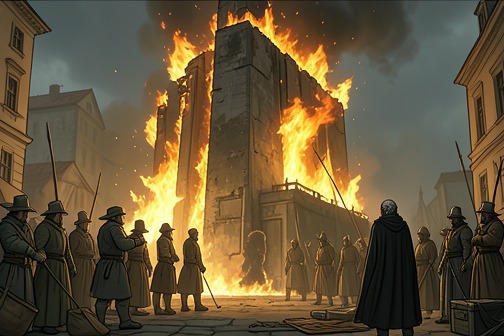
The [Burning of the Tower of the Hand](entity:event-recall-event-burning-of-the-tower-of-b4afefe808dd) is both a literal demolition and a political performance. During King Tommen’s wedding to [Margaery Tyrell](entity:character-recall-character-margaery-tyrell-d3cc06ed6ac6), [Cersei Lannister](entity:character-recall-character-cersei-lannister-666bd8aa8550) has the already ruined Tower of the Hand packed with wildfire and sets it ablaze before the assembled court. The fire destroys the tower and the possessions of [Tyrion Lannister](entity:character-recall-character-tyrion-lannister-79371f1b503e), while Cersei interprets its flames as the cleansing of old enemies and the assertion of her own rule.
## Causes and Political Setting
The burning occurs against the diminished backdrop of Tommen’s marriage. Unlike Joffrey’s lavish wedding, Tommen’s ceremony is small, held in the [Red Keep](entity:location-recall-location-red-keep-df1aebb0ddc9)’s royal sept with fewer than a hundred guests. Margaery wears the same gown she wore when she married Joffrey, while Cersei remains dressed in mourning for her murdered firstborn. The modest scale and repeated garments make the occasion feel less like a new beginning than an uneasy rearrangement of power after Joffrey’s death.
Cersei experiences the wedding as an imposition by [Highgarden](entity:location-recall-location-highgarden-bbb664f18f6e). She believes the marriage has been forced upon her and resents the Tyrell influence gathered around the young king. Her hatred is also directed backward, toward the succession of Hands and counselors whose plots, authority, or opposition she associates with threats to her family. The Tower of the Hand therefore carries more than architectural meaning: it is the former home of the king’s chief ministers and a visible reminder of institutions and men whom Cersei wants to believe she has outlived.
The tower is already dark and damaged, its doors and shuttered windows gone and its upper battlements broken. Yet its ruined bulk still dominates the outer ward. By choosing this structure as the object of the ceremony, Cersei converts an existing wound in the Red Keep into a controlled act of destruction. The setting allows her to present political violence as pageantry rather than confession.
## The Fire and Its Mechanism
After the wedding guests leave the Small Hall, Cersei announces that they will light a candle celebrating the union of Highgarden and [Casterly Rock](entity:location-recall-location-casterly-rock-b2a473d84028) and a new age of peace and plenty. The language of peace conceals the operation that follows. About a hundred yards from the tower, she gives Lord Hallyne permission to begin, and the pyromancer signals the archers on the walls. They send a dozen flaming arrows through the tower’s open windows.
The result is immediate. The Tower of the Hand erupts with red, yellow, orange, and ominous dark-green light. Fifty pots of wildfire have been placed inside, together with logs, casks of pitch, and most of Tyrion Lannister’s worldly possessions. The substance burns so fiercely that the pyromancers claim only dragonflame, the fires beneath the earth, and the summer sun are hotter. Its color gives the spectacle an especially unnatural character: the green flames lick up the walls like living tongues, making the destruction look at once ceremonial, poisonous, and supernatural.
The fire is carefully made visible to the court. Some ladies gasp when it appears; others cheer and raise toasts. Knights begin wagering on how long the tower will take to collapse, while Lord Hallyne hums and rocks on his heels. The audience is thus turned into a congregation and a crowd of spectators at once, invited to treat the burning as entertainment even though it destroys a major royal building and the belongings of a politically hated man.
The spectacle reaches its physical climax when the tower groans loudly enough to silence every conversation. Stone cracks and splits, part of the upper battlements falls away, and the impact shakes the hill beneath a cloud of dust and smoke. Fresh air enters through the broken masonry, feeding the blaze. Green flames leap into the sky and whirl around one another until Margaery tells Tommen that they are dancing. The child king, frightened and fascinated, accepts the image with wonder and repeats it to his mother.
## Cersei’s Vengeance and Self-Interpretation
Cersei does not regard the fire as mere destruction. As she watches it, she thinks of the Hands she has known: Owen Merryweather, Jon Connington, Qarlton Chelsted, Jon Arryn, Eddard Stark, Tyrion Lannister, and her father, Tywin Lannister. She imagines all of them burning together with their plots, schemes, and betrayals. The tower becomes a symbolic pyre for the political past, even though several of the men named are not literally present and the fire’s immediate victims include Tyrion’s possessions rather than Tyrion himself.
Her response exposes the emotional logic of the event. She finds the flames beautiful and associates them with Joffrey, whom she remembers after his death, binding maternal grief to destructive pleasure. The fire lets her recast rage and fear as purification. What has been damaged, threatened, or taken from her is imagined as being burned away, leaving resolve in its place.
The ceremony also marks a change in Cersei’s relation to power. She tells herself that the day belongs to her, that the castle and kingdom are hers. The statement is less a neutral description than a declaration made against the memory of earlier Hands, her father’s authority, Tyrion’s presence, and the Tyrells’ growing influence over Tommen. By staging the burning at a royal wedding, she places her own will at the center of an event ostensibly devoted to dynastic union.
## Immediate Consequences and Narrative Significance
The Tower of the Hand is physically destroyed, while the wedding’s language of peace and plenty is exposed as a thin ceremonial cover for hostility. Cersei’s public performance does not erase the political tensions surrounding Tommen’s marriage; instead, it gives those tensions a spectacular image. Highgarden and Casterly Rock are said to be entering a new age together, but the ceremony is accompanied by a tower collapsing in green fire and by Cersei’s private fantasy of enemies burning.
Tommen’s reaction reveals the scene’s unsettling doubleness. He is both frightened and delighted, and Margaery’s gentle description makes the wildfire seem like a dance. Cersei encourages the child’s fascination rather than treating the fire as a warning. The court’s toasts and wagers likewise transform danger into amusement. The event therefore shows how royal power can aestheticize violence: destruction becomes beautiful when the ruler controls its timing, audience, and interpretation.
When Jaime Lannister urges Cersei not to remain alone, she refuses to leave. She says that the wildfire has made her feel alive, cleansing her and filling her with resolve, and that she wants to watch it for a while. She accepts Ser Osmund Kettleblack as her companion and guard, keeping herself beside the flames after the other wedding participants have been escorted away. The ending narrows the public pageant into a private vigil, leaving Cersei alone with the destruction she ordered and the conviction that it has renewed her.
Event 6
The Shield Islands Invasion
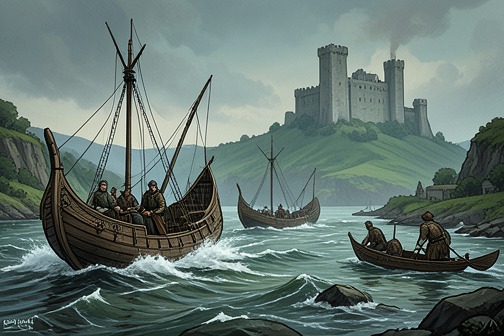
[The Shield Islands Invasion](entity:event-recall-event-the-shield-islands-inva-4ee3db482cc3) is the Ironborn seizure of Greyshield, Greenshield, Southshield, and Oakenshield at the mouth of the Mander. Its decisive importance lies in the way [Euron Greyjoy](entity:character-recall-character-euron-greyjoy-7b02c582af38) turns the islands’ ancient defensive system against themselves: a diversion draws the island lords upriver while the main fleet arrives from the west, captures the strongholds, and closes the river to pursuit. The conquest gives the Ironborn positions from which they can threaten [Oldtown](entity:location-recall-location-oldtown-909d382b43db), the Arbor, and even [Highgarden](entity:location-recall-location-highgarden-bbb664f18f6e), making the invasion far more consequential than an ordinary coastal raid.
## Strategic Background
The Mander is a broad, slow, treacherous river marked by snags and sandbars. Most seagoing vessels cannot safely travel beyond Highgarden, but Ironborn longships, with their shallow draughts, can sail as far upstream as Bitterbridge. The river therefore offers an old route into the Reach, one used in ancient times by Ironborn raiders who plundered the Mander and its tributaries.
The four islands at the river’s mouth were created as a deliberate shield against that history. Their names are Greyshield, Greenshield, Oakenshield, and Southshield, and for two thousand years their watchtowers had maintained an ancient vigil. Greybeards stationed along the craggy shores were expected to light beacon fires at the first sight of longships. The warning would pass from hill to hill and island to island, summoning fisherfolk, farmers, local lords, knights, and men-at-arms. Warhorns would sound, and the island longships would emerge from moss-covered stone pens to seal the Mander and pursue raiders upriver.
That system depended on early warning and coordinated response. Euron’s plan attacked both conditions at once. Torwold Browntooth and the Red Oarsman were sent ahead with a dozen swift longships, deliberately presenting the appearance of the main danger and provoking the lords of the [Shield Islands](entity:location-recall-location-shield-islands-a2b18fdd26ff) into pursuit. While the defenders were drawn away, Euron’s larger fleet approached the islands by another route.
## The Assault and Capture
The Ironborn arrived on the evening tide. The setting sun concealed the fleet from the greybeards in the watchtowers until the invasion was already underway, while a favorable wind had carried the ships westward from [Old Wyk](entity:location-recall-location-old-wyk-dcf01256b742). The fleet’s unusual route became part of its sinister reputation: instead of following the shoreline, it had sailed far out into the Sunset Sea and then swooped back toward the Shields from the west.
Rumor attributed that success to Euron’s wizards and to blood sacrifice offered to the [Storm God](entity:concept-recall-concept-storm-god-5d3049d9d529). The narrative does not establish the supernatural explanation as fact, but it emphasizes how completely the operation exceeded ordinary expectations. The wind remained at the fleet’s back, and Euron dared a voyage that customary seamanship would have considered reckless. Whether the victory came from sorcery, planning, or both, the result was the same: the Shield Islands were struck before their warning network could mobilize.
The longships ran onto the stony shingles, and Ironborn fighters poured into the purple dusk with steel in their hands. Beacon fires were burning by then, but too few defenders remained to answer them. Greyshield, Greenshield, and Southshield fell before sunrise. Oakenshield resisted for approximately half a day longer, but it too was overcome. The speed of the conquest reveals the invasion’s central method: the islands were not defeated through a prolonged reduction of their defenses, but isolated and overwhelmed before their customary strength could gather.
## The Broken Pursuit
The diversion worked precisely as intended. The men of the four islands pursued Torwold Browntooth and the Red Oarsman upriver, leaving only a handful of fighting men to defend the island strongholds themselves. Once the islanders abandoned the chase and turned back downriver, they discovered that the [Iron Fleet](entity:organization-recall-organization-iron-fleet-5a2dde0e641c) was waiting at the Mander’s mouth.
This reversal converted pursuit into entrapment. The defenders had followed the danger they could see and returned to find the greater danger blocking their way home. The ancient beacon system, which normally transformed scattered island communities into a united barrier, instead announced an attack already in progress. The Ironborn exploited the defenders’ discipline rather than merely overcoming it: the response that had protected the Shields for centuries became the mechanism by which their forces were removed from the decisive battlefield.
## Political and Military Consequences
The invasion alarmed the Reach and the royal court because the captured islands were not isolated prizes. From strongholds on the Shields, Ironborn raiders could sail up the Mander into the heart of the Reach, following the same river road used in ancient times. Their bases threatened Oldtown and the Arbor directly, while a sufficiently large force might even threaten Highgarden.
The scale of the attack also distinguished it from a conventional reaving expedition. [Margaery Tyrell](entity:character-recall-character-margaery-tyrell-d3cc06ed6ac6) reported that the Ironborn had come in a thousand ships. Lord Hewett and Lord Chester were slain; Lord Serry’s son and heir was dead, and Lord Serry himself fled to Highgarden with the few ships remaining to him. Lord Grimm was held prisoner in his own castle. Euron had also installed four lords of his own in place of defeated rulers, showing that the conquest involved occupation and political replacement rather than a temporary raid.
The new bases altered the strategic balance of the wider war. They threatened to draw attention and ships away from [Dragonstone](entity:location-recall-location-dragonstone-17d3e2de9fa1) and Storm’s End, and they forced the Reach to confront an enemy capable of appearing where its coastal defenses least expected it. Willas Tyrell could raise ten thousand men within a fortnight and twice that number within a moon’s turn, but troops could not simply march across the sea. The invasion thus exposed a gap between the Reach’s substantial land power and its inadequate naval response.
## Significance
The Shield Islands Invasion is a study in mobility, misdirection, and the difference between a raid and a campaign of conquest. Euron Greyjoy’s fleet does not win by meeting the defenders at their strongest. It separates the island forces, uses dusk and distance to defeat their warning system, captures the four strongholds in rapid succession, and then positions itself to control access to the Mander.
Its deeper irony lies in the islands’ name and history. The Shields were built to protect the Reach from the sea, and their people had preserved the same warning ritual for two thousand years. Yet an enemy who approached from beyond the expected horizon and supplied a false target turned that inherited security into vulnerability. The conquest makes the Reach’s coast appear not defended but penetrable, and it presents Euron’s rule as a power capable of converting surprise into permanent strategic leverage.
Event 7
The Failed Queenmaker Plot
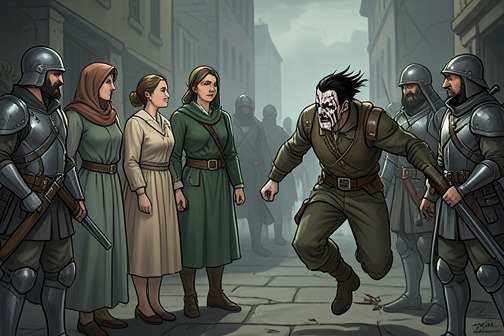
[The Failed Queenmaker Plot](entity:event-recall-event-the-failed-queenmaker-p-00047b99c972) is [Arianne Martell](entity:character-recall-character-arianne-martell-95a219548edd)’s clandestine attempt to make [Myrcella Baratheon](entity:character-recall-character-myrcella-baratheon-110f9c16b8a2) queen, a scheme driven by inheritance, vengeance, and her determination to compel Dorne into open conflict with House Lannister. Conceived as both a rescue of Dornish honor and a bid for political transformation, it instead exposes the danger of treating a frightened child as a dynastic instrument and ends with the conspirators captured and Ser [Arys Oakheart](entity:character-recall-character-arys-oakheart-48e5d4471937) mortally wounded.
## Causes and Political Aim
Arianne’s plan joins several ambitions that she does not distinguish sharply enough. She wants the Sand Snakes freed, vengeance for Oberyn Martell and Elia Martell, and a taste of lion blood, but she also insists that she seeks her birthright: [Sunspear](entity:location-recall-location-sunspear-9f48dd771cf4), her father’s seat, and Dorne. Her declaration that she wants justice gives the conspiracy a moral vocabulary, yet the proposed crowning is also a direct challenge to [Doran Martell](entity:character-recall-character-doran-martell-333118b48c5d)’s cautious rule and to the Lannisters’ control of the [Iron Throne](entity:location-recall-location-iron-throne-03617e4bcdbd).
The intended political logic is that crowning Myrcella would provoke the Lannisters and provide the war Arianne desires. Her opponent argues that the gesture would be hollow: Myrcella would never truly sit the Iron Throne, and the lion would not be easily provoked. Arianne answers that the lion is dead and wonders which cub the lioness prefers, revealing how strongly the plot depends on uncertainty within House Lannister as well as on the succession dispute itself.
Arianne also imagines the aftermath as a sweeping consolidation of Dorne. Once Myrcella is crowned and the Sand Snakes freed, she expects all Dorne to rally to her banners. She considers the Yronwoods a possible threat through [Quentyn Martell](entity:character-recall-character-quentyn-martell-de7ebc65cba5), but believes they could be destroyed if they aligned with Tommen Baratheon and the Lannisters. The projected future is therefore not merely a coronation: it is an imagined transfer of power in which Arianne would command loyalty, settle internal opposition, and restore Doran Martell to the [Water Gardens](entity:location-recall-location-water-gardens-8608197ebe06).
## The Attempted Coronation
The plot reaches its public-facing stage when Myrcella, confused and frightened, finds herself surrounded by Arianne’s supporters. She clutches Arys Oakheart and asks why people call her Grace, what place she is in, and who the armed or kneeling figures are. When she embraces Arianne, she still does not understand the political danger; she asks why they call her queen and whether something bad has happened to Tommen.
Arianne supplies the explanation that the conspiracy requires. She tells Myrcella that Tommen has fallen in with evil men who have conspired to steal her throne. Because Myrcella is older by a year, Arianne presents the Iron Throne as hers by right and urges her not to blame her younger brother, placing responsibility instead on his counselors. The argument turns a child’s age into the foundation of a rival monarchy, while the ceremonial introductions to Arianne’s friends begin to give the supposed queenship a courtly shape.
The party is deliberately small. Seven riders leave the dust-dry ruins of [Shandystone](entity:location-recall-location-shandystone-d688fcad699d) under the Moonmaid: Arianne and Arys at the front, Myrcella between them on a frisky mare, Garin and Spotted Sylva behind, and two Dornish knights at the rear. Arianne interprets the number as a good omen and imagines that singers will make the riders immortal. Yet the same arrangement exposes the plot’s fragility. A larger escort might have attracted attention, while each additional man increased the risk of betrayal; the reduced company makes secrecy possible but leaves the queenmaking attempt vulnerable to a single interception.
## Interception at the Poleboat
The decisive reversal comes at a poleboat hidden beneath a great green willow downstream. The vessel is painted green and ornamented with a mermaid-shaped tiller and fish-faced rails, its decks crowded with poles, ropes, jars of olive oil, and lanterns. Garin approaches expecting a royal welcome, but the boat’s door slams open and [Areo Hotah](entity:character-recall-character-areo-hotah-3fad78d96d84) steps into the sunlight with his longaxe in hand.
Hotah’s appearance transforms the scene from a secret procession into an encirclement. He strikes the butt of his longaxe against the deck, and a dozen guardsmen rise behind the rails with throwing spears and crossbows; more appear above the cabin. He orders Arianne to yield, warning that otherwise the guards must kill everyone except the child and Arianne herself, acting by Doran Martell’s command. The demand makes the hidden structure of the plot unmistakable: Doran’s silence and caution have not meant passivity, and the supposed royal escort has been anticipated and contained.
The conspirators begin to surrender. Myrcella remains motionless on her mount, while Garin slowly backs away with his hands raised. Andrey Dalt unbuckles his swordbelt and says that yielding seems wisest. Arianne recognizes that the cause is lost, but the words urging Arys to surrender catch in her throat. Her inability to command the necessary sacrifice becomes the emotional hinge of the event: the political calculation that brought the group into danger gives way to paralysis when the life of the man who loves her is placed directly before her.
## Arys Oakheart’s Last Stand
Arys refuses the practical solution. He places his horse between Arianne and the crossbows, draws his sword, and shields her with his body. After giving Arianne one last longing look, he charges the poleboat. His white cloak streams behind him as he rides headlong into a prepared position, an act Arianne recognizes as gallant but foolish only after it has begun.
The attack is immediately overwhelmed by concentrated fire. A crossbow bolt punches through Arys’s heavy oaken shield and pins it to his shoulder; another grazes his temple. A thrown spear strikes his horse in the flank, yet the wounded animal reaches the gangplank. Arys cuts down two spearmen and retains his longsword even after the horse rears and kicks a crossbowman in the face. The remaining crossbows then feather the courser with quarrels, knocking it sideways and sending horse and rider crashing onto the deck.
Arys’s resistance gives the failed plot its final tragic form. His loyalty cannot rescue Arianne, alter Myrcella’s status, or break the encirclement; it can only convert capture into bloodshed. The value at stake shifts from the possibility of a crown to the immediate preservation of life, and then from life to a doomed assertion of honor. The queenmaking attempt therefore ends not in a coronation or a war, but in the violent exposure of its limits.
## Consequences and Significance
The interception defeats Arianne’s immediate objectives at once. Myrcella is not crowned, the Sand Snakes are not freed through this action, and the hoped-for confrontation with the Lannisters does not begin on Arianne’s terms. Instead, the conspirators are disarmed or compelled to yield, while Doran Martell’s forces retain control of the child and the political situation.
The plot also reveals the contrast between Arianne’s romantic vision and Doran’s method. She sees seven riders on the road to glory and imagines banners, songs, and a united Dorne; Doran’s response arrives through concealment, surveillance, and a carefully arranged force hidden in an unassuming boat. Her desire to put down his burdens becomes another sign that she has misunderstood the burdens he has already been carrying.
As a failed quest and a failed rescue, the event reverses the conventional promise of heroic return. Arianne crosses into danger intending to return with a crowned queen and a transformed Dorne, but the threshold yields no triumph or integration. The journey instead produces recognition through defeat: the child is frightened rather than commanding, the escort is compromised, the father’s caution is stronger than expected, and Arys’s devotion cannot compensate for the conspiracy’s political and tactical weakness. The plot’s decisive lesson is that ambition and grievance, when organized around a vulnerable claimant and sustained by wishful forecasts of popular support, lead not to liberation but to exposure, capture, and irreversible loss.
Event 8
Death of Ser Arys Oakheart
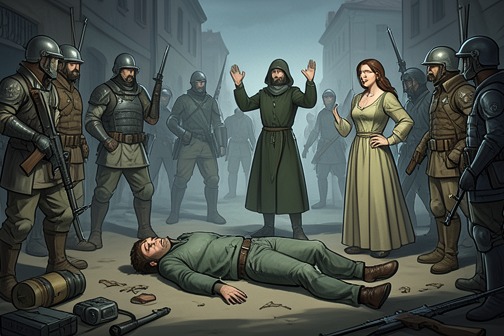
[Death of Ser Arys Oakheart](entity:event-recall-event-death-of-ser-arys-oakhe-c9c074157e34) is the violent turning point that ends [Arianne Martell](entity:character-recall-character-arianne-martell-95a219548edd)’s attempted seizure of political initiative through [Myrcella Baratheon](entity:character-recall-character-myrcella-baratheon-110f9c16b8a2). Surrounded on the [Greenblood](entity:location-recall-location-greenblood-6332b5b6b1ba) by [Areo Hotah](entity:character-recall-character-areo-hotah-3fad78d96d84) and armed guards acting on the prince’s orders, the conspirators face surrender or annihilation. Arys chooses resistance in the name of his protection of Myrcella and Arianne, but his charge produces no rescue. It only brings his death, the collapse of the expedition, and the arrest of those he meant to defend.
## Causes and Confrontation
The crisis begins when a poleboat door opens and Areo Hotah steps into the sunlight with his longaxe. Behind the boat’s ornate rails, a dozen guardsmen rise with throwing spears and crossbows, while more appear on the cabin roof. Hotah calls on Arianne Martell to yield, explaining that the prince’s command is to spare only her and the child, Myrcella Baratheon. The demand makes the political stakes unmistakable: this is not an accidental roadside clash but a planned interception by Dornish authority.
The balance of force is immediately hopeless. Garin stops and backs away with his hands raised; Drey unbuckles his swordbelt and lets his sword fall, openly judging surrender the wisest course. Arianne Martell recognizes that the expedition has been discovered and that further resistance cannot free anyone. Her inability to voice that conclusion, however, leaves a fatal opening. The scene places practical submission beside aristocratic ideals of loyalty, allowing Arys’s decision to emerge as both personal devotion and catastrophic misjudgment.
## Arys’s Last Charge
Arys puts his horse between Arianne Martell and the crossbows, drawing his blade and fitting his shield to his left arm. He declares that the guards will not take Arianne while he still draws breath. Darkstar and Drey both urge him to put up his sword, but Arys does not accept the tactical reality before him. After giving Arianne one last longing look, he drives his golden spurs into his horse and charges the poleboat.
The charge is described through Arianne’s divided judgment: she sees it as gallant and as foolish, without either description canceling the other. His white cloak streams behind him as he rides headlong toward the armed boat. Arianne cries out against the attack, but her protest comes too late. The first crossbow bolt punches through his heavy oaken shield and pins it to his shoulder; a second grazes his temple. A thrown spear strikes his horse in the flank, yet the wounded animal continues up the gangplank while Myrcella Baratheon shrieks in fear.
Arys still manages a short burst of violence. His longsword cuts down two spearmen, and his rearing horse kicks a crossbowman in the face as the man tries to reload. The other crossbows then overwhelm both rider and mount. Quarrels feather the courser, striking with enough force to knock it sideways. The horse collapses across the deck, but Arys leaps free with his sword still in hand and struggles to his knees beside the dying animal.
## Death and Immediate Aftermath
Areo Hotah is waiting over him. Arys raises his blade too slowly. Hotah’s longaxe severs his right arm at the shoulder, then returns in a second two-handed slash that removes his head. The head lands among the reeds, and the Greenblood absorbs the blood with a soft splash. The execution is swift only after Arys has crossed the distance himself; his attempted rescue becomes the route by which he is brought within reach of the weapon that kills him.
The death shatters Arianne Martell’s perception of the scene. She cannot remember whether she climbed down from her horse or fell, but finds herself on hands and feet in the sand, shaking, sobbing, and retching. Her thoughts remain fixed on the failed premise that no one was supposed to be hurt and that the plan had been carefully arranged. The repeated refusal to accept what has happened turns the political reversal into a psychological one: intention, preparation, and romantic expectation all prove powerless against the physical fact of Arys’s corpse.
Myrcella Baratheon is also on the ground, wailing and trembling with her pale face in her hands while blood runs through her fingers. The surrounding men scramble for horses and swarm over Arianne Martell and her companions, but Arianne experiences the aftermath as a terrible red dream. Hotah orders the pursuit of anyone who might escape, then the guards bind Arianne’s hands. She does not resist. One guard takes the throwing knife hidden in her boot, a gift from Lady Nym, and Hotah claims it before announcing that the prince has ordered Arianne returned to [Sunspear](entity:location-recall-location-sunspear-9f48dd771cf4). His face and brow are freckled with Arys’s blood, and his apology to the captured princess leaves the scene suspended between official duty and the human cost of its fulfillment.
## Consequences and Significance
Arys’s death converts a failed conspiracy into a public and personal disaster. His protective oath does not preserve Arianne Martell or Myrcella Baratheon; instead, his refusal to yield removes the only immediate possibility of a bloodless surrender. Arianne is taken back toward Sunspear, Myrcella is traumatized and injured, and the surviving members of the party are subdued. The plot’s intended political transformation therefore ends in the opposite condition: its central actors lose freedom, initiative, and control.
The event also exposes the instability of chivalric language when separated from judgment. Arys acts from a recognizable ideal of the white knight, placing himself between the threatened princess and the weapons pointed at her. Yet the same act that appears most honorable to Arianne is tactically indefensible. The narrative refuses to make gallantry either wholly admirable or wholly absurd: Arys’s courage is real, his resistance briefly effective, and his death nevertheless needless in the circumstances. His final look toward Arianne gives the charge an intimate emotional motive, while the crossbows, spears, and longaxe reduce that motive to a fatal gesture.
As a scene, the death marks a complete reversal in the value of the expedition. Arianne’s party begins with the expectation that its plan can be executed and that Myrcella can be protected; it ends with Arys dead, Myrcella terrified, and Arianne bound. The transition from movement toward political triumph to helpless return toward Sunspear is compressed into a single confrontation on the river. The Greenblood, which carries the blood away after Hotah’s final blow, becomes the scene’s closing image of consequence: private loyalty and grand design alike are swept into the larger current of princely authority.
Event 9
Fall of Dragonstone
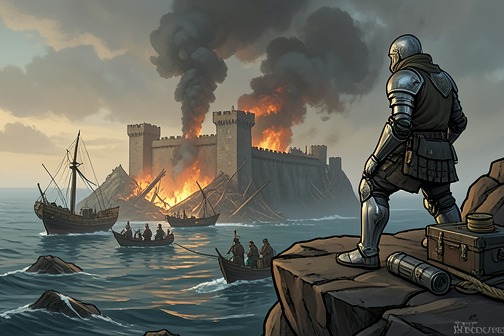
The [Fall of Dragonstone](entity:event-recall-event-fall-of-dragonstone-b913443ab50b) marks the capture of Stannis Baratheon’s island stronghold for Tommen Baratheon’s cause, but its apparent success is inseparable from the slaughter that produces it. [Cersei Lannister](entity:character-recall-character-cersei-lannister-666bd8aa8550) treats the castle as a threat aimed directly at her son and accepts [Loras Tyrell](entity:character-recall-character-loras-tyrell-05ee4eb098c2)’s promise of a rapid conquest; when [Aurane Waters](entity:character-recall-character-aurane-waters-2f87e168c997) later announces that [Dragonstone](entity:location-recall-location-dragonstone-17d3e2de9fa1) is hers, the victory has already become a grim reversal, leaving Loras near death and much of the royal force destroyed.
## Causes and Strategic Stakes
Cersei presents Dragonstone as more than another enemy castle. While arguing that Storm’s End is vastly more valuable than the [Shield Islands](entity:location-recall-location-shield-islands-a2b18fdd26ff), she insists that Dragonstone remains, so long as it is held by Stannis Baratheon, a knife at Tommen’s throat. Her immediate plan is therefore conditional: Lord Redwyne and his fleet will be released only after Storm’s End falls. The decision binds the siege of Dragonstone to the wider struggle for naval strength, supply, and the security of the crown’s territories.
Aurane Waters objects to any diversion that would weaken the operations elsewhere. If Lord Redwyne sails away, the royal forces will lack the ships needed to supply their men on Dragonstone and to maintain the siege of Storm’s End. The disagreement reveals the practical limits beneath Cersei’s strategic confidence: the crown is trying to sustain several campaigns with a fleet whose movements determine whether its armies can be fed, reinforced, or kept in place.
## Loras Takes Command
The expected method of reducing Dragonstone is a prolonged blockade. Lord Paxter Redwyne intends to starve the castle into submission, a process Loras Tyrell says could take half a year or more. Loras rejects that slow timetable and offers himself as the instrument of a faster solution, kneeling before Cersei and asking for command. He promises that the castle will be hers within a fortnight, even if taking it requires tearing it down with his bare hands.
Cersei receives the offer as a political gift as much as a military one. Loras’s intervention places the celebrated knight under her authority and visibly alarms [Margaery Tyrell](entity:character-recall-character-margaery-tyrell-d3cc06ed6ac6), whose face goes pale when her brother volunteers. Cersei immediately turns the moment into an appointment: she asks whether one of the new dromonds is seaworthy, and Waters identifies the ship Sweet Cersei as swift and strong. The vessel is ordered to carry Loras to Dragonstone, and Cersei commands him not to return until the castle belongs to Tommen. Loras accepts without hesitation.
## Capture and Cost
The battle ends in a victory for the crown, but Waters’s report strips the victory of its clean ceremonial appearance. When Sweet Cersei returns on the evening tide, Cersei summons Waters at once, reading his broad smile as evidence that the news is favorable. He confirms that Dragonstone is hers. The castle has fallen, and Cersei immediately connects its capture to the next strategic movement: Lord Redwyne’s fleet can now be released so that the crown may confront the Ironborn occupying and raiding the Shield Islands.
The military result is therefore presented as both a liberation of naval resources and a new obligation. The Ironborn have been raiding up the Mander, attacking the Arbor and the smaller islands around it, while Redwyne’s home waters have been left with no more than a dozen warships. Those ships have been overwhelmed, captured, or sunk, and reports claim that [Euron Greyjoy](entity:character-recall-character-euron-greyjoy-7b02c582af38) is sending longships up [Whispering Sound](entity:location-recall-location-whispering-sound-acdb70ac923f) toward [Oldtown](entity:location-recall-location-oldtown-909d382b43db). Dragonstone’s fall does not end the crisis; it allows the crown to shift its strained resources toward another front.
Waters’s account also reveals that Loras transformed what might have been a bloodless victory into a slaughter. A thousand men are dead, or so gravely wounded that the distinction scarcely matters. Most are men of the crown’s own forces, including knights and young lords described as the best and bravest. The number makes the cost specific and communal: the disaster is not confined to anonymous soldiers but reaches the social and military class on which the ruling coalition depends.
Loras himself becomes the thousand-and-first casualty. He was carried inside the castle after the battle with grievous wounds and has lost so much blood that the maesters will not even leech him. His promise of a fortnight’s conquest is fulfilled in the most destructive manner possible: Dragonstone is taken, but the knight who demanded the assault may not survive to enjoy the achievement.
## Aftermath and Political Meaning
Cersei responds to the news with public delight and private calculation. She kisses Waters on both cheeks and says that Tommen will be pleased, then immediately names the practical consequence of the capture: Lord Redwyne’s fleet can depart and the crown can move against the Ironborn. Her attention remains fixed on ships, castles, and the next threat rather than on the human cost that Waters has just described.
Her treatment of Loras’s condition is equally revealing. When Waters explains that Loras is likely to die, Cersei answers that Tommen will be heartbroken because he admired the Knight of Flowers. Waters adds that the smallfolk will mourn him as well, imagining maidens weeping into their wine across the realm. The exchange converts a battlefield catastrophe into a problem of reputation and public feeling. Loras’s death, if it comes, will matter not only as the loss of a commander but as the symbolic loss of a beloved knight whose fame can be used to frame the conquest as gallantry rather than waste.
The event’s decisive irony lies in the distance between its language and its outcome. Cersei calls Dragonstone a knife at her son’s throat, while Loras offers courage, speed, and personal sacrifice as the answer. Yet the resulting victory leaves a thousand dead or dying, destroys the reputation of a bloodless conquest, and places Loras among the casualties. Dragonstone is secured for the crown, but the manner of its fall demonstrates that political triumph and military ruin can occupy the same moment.
Event 10
Dareon’s Murder
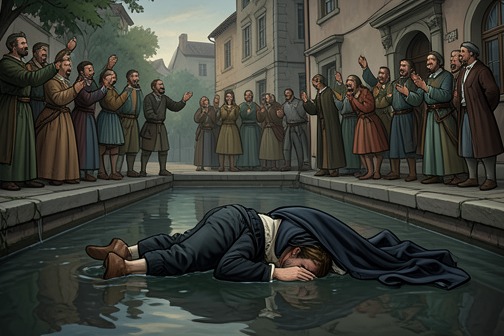
[Dareon’s Murder](entity:event-recall-event-dareon-s-murder-387abc5e60e3) is the killing of [Dareon](entity:character-recall-character-dareon-49247b5e5640), a sworn brother of the Night’s Watch who deserted in [Braavos](entity:location-recall-location-braavos-529be989fd6a). The event is not shown directly. Instead, the narrative first presents Dareon alive in the Happy Port, spending money that [Samwell Tarly](entity:character-recall-character-samwell-tarly-53bd9fdfa8fc) believes should have bought food and firewood for Maester Aemon, and later reveals that someone slit the singer’s throat, pushed his body into a canal, and took his boots. Its decisive significance lies in this delayed disclosure: a personal betrayal within the Night’s Watch becomes an unspoken act of violence and, eventually, part of [Arya Stark](entity:character-recall-character-arya-stark-a22d5d47f998)’s passage into the methods of the Faceless Men.
## Circumstances Before the Killing
Dareon appears in the Happy Port as a deserter who has abandoned the duties implied by the Night’s Watch vows. When Samwell reaches the establishment, Dareon is drinking, consorting with prostitutes, and presenting one woman as his temporary wife while wearing his black cloak. He greets Sam as “Sam the Slayer” and calls him his sworn brother, turning the language of brotherhood into part of the tavern’s drunken performance. His behavior is especially damaging because Sam has come with urgent practical concerns: the money Dareon is spending could have purchased food and wood to keep the aged Maester Aemon alive and warm.
The encounter also exposes the distance between Dareon’s public identity and his conduct. He treats his vows as an inconvenience and jokes that a one-night marriage carries no serious penalty, while Sam recognizes that desertion could warrant death. Dareon’s familiar voice and affectionate address briefly recall the fellowship of the Night’s Watch, but the black cloak on the prostitute and the casual offer of another woman’s company make that fellowship appear emptied of responsibility. The murder therefore follows a prior moral rupture: Dareon has already abandoned the institution and the companions whose needs his coin might have served.
## The Murder and Its Delayed Presentation
The killing itself occurs outside the narrated scene. No culprit, weapon, exact time, or motive is established in the available account. The facts later supplied to Arya Stark are precise but limited: Dareon was the black singer sleeping at the Happy Port; he was truly a deserter from the Night’s Watch; someone cut his throat, threw him into a canal, and kept his boots. The missing killer and absent eyewitnesses make the event a fragment of knowledge rather than a fully witnessed episode.
This indirect structure gives the murder a distinctive narrative shape. Sam encounters Dareon in life, sees his corruption and waste, and leaves without witnessing what will happen to him. Arya later receives the death as one item among the day’s information, alongside the uncertain report that Quence and Alaquo have left the Ship and may return. The murder is thus placed beside rumor, inference, and tested observation. The kindly man asks whether Arya merely thinks the mummers will return or knows it; when she identifies Dareon’s death, she speaks with certainty. The event becomes a measure of what can be known in a city where information is bought, concealed, and transformed.
## Discovery and Attribution
Arya reports that Dareon was murdered and identifies herself as the killer when the kindly man asks who could have done it. Her answer is given without hesitation: “Arya of House Stark.” The exchange immediately changes the status of the death. It is no longer only news about a deserter found in a canal; it becomes evidence that Arya has acted under the name and identity she is learning to inhabit. The kindly man’s question about who she is shows that the disclosure also tests whether the girl understands the relation between the deed and the self who claims it.
The evidence does not describe the act itself or explain every reason for it, so the murder’s full motive remains outside the presented account. What is clear is the contrast between Dareon’s earlier abuse of the Night’s Watch identity and Arya’s later use of a declared identity in reporting the killing. Dareon wears the black cloak while betraying its obligations; Arya names herself while entering a discipline built on the removal and reassignment of names. The event consequently links desertion, punishment, anonymity, and the unstable meaning of personal identity.
## Consequences and Narrative Significance
For Samwell Tarly, Dareon’s death is inseparable from the anger and grief produced by his desertion. Sam has seen the singer squander resources needed by Maester Aemon, and the later report that Dareon was killed closes that encounter with a grim consequence. The death does not restore what was lost or resolve Sam’s fear for the Night’s Watch; instead, it confirms how far the company’s vows and mutual obligations have deteriorated beyond the Wall and across the Narrow Sea.
For Arya Stark, the murder marks a further stage in her apprenticeship among the Faceless Men. She must distinguish certainty from speculation, observe what others overlook, and answer a question about responsibility without retreating behind concealment. The detail that the boots were taken is both practical and emblematic: even after death, a body supplies something useful to the living, and the murder is described through the material trace left behind. In this way, Dareon’s Murder joins the book’s wider pattern of violence as an instrument that strips away status while producing new knowledge for those who survive.
The event also resonates with the book’s repeated concern with people broken or displaced by war and institutions. [Septon Meribald](entity:character-recall-character-septon-meribald-4966e3656846) explains that ordinary men can be driven from homes, stripped of comrades, and reduced to survival; Dareon represents a different but related collapse, one in which a sworn brother turns away from communal duty and pursues immediate pleasure. His death is neither narrated as a grand battle nor granted a public ritual. It is a throat cut, a canal, missing boots, and a fact carried from one consciousness to another. That small, brutal scale is precisely what gives the event its force: the political world is full of ceremonies, councils, kingsmoots, arrests, and proclamations, but individual lives may end in silence, with their meaning reconstructed only afterward.
Event 11
Maester Aemon’s Death
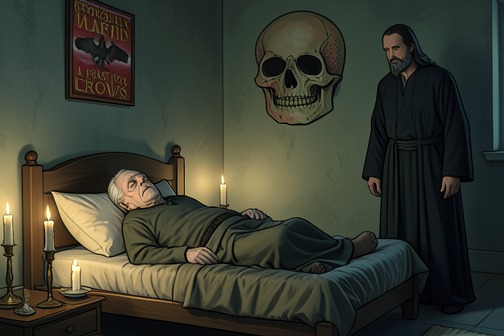
[Maester Aemon’s Death](entity:event-recall-event-maester-aemon-s-death-974fde058427) is presented not as a sudden interruption but as the final narrowing of a long life devoted to service, memory, and restraint. Aemon Targaryen recognizes that he will not reach [Oldtown](entity:location-recall-location-oldtown-909d382b43db), confronts the fear beneath his old age and illness, and dies before the [Citadel](entity:location-recall-location-citadel-b473dfa394d2)’s healers can be consulted. His passing closes the watch of a man who could once have been king, yet chose the crown for his younger brother and spent his remaining life at the Wall. Through [Samwell Tarly](entity:character-recall-character-samwell-tarly-53bd9fdfa8fc)’s mourning and Aemon’s last interpretation of the dragon prophecies, the event links personal grief to the possible return of forces believed lost to history.
## Final Illness and Acceptance
Aemon’s last conversation with Samwell Tarly begins with physical decline and the old man’s recognition that this illness will not pass. When Sam promises that he will recover, Aemon rejects the reassurance and says that he will not see Oldtown again. He understands death as imminent rather than abstract: the Stranger waits outside his door, and the prospect of joining his dead brothers and father forces him to examine what may lie beyond death. The certainty does not make him serene. He wonders whether death brings the sweet release promised by septons or only cold, darkness, and pain beyond the wall of death.
Aemon’s fear is made visible through his weakened body. His fingers tremble, and his memories arrive through fever, dreams, and uncertainty. He asks why the gods took his eyes and strength yet allowed him to linger so long, frozen and forgotten, and what use they could have for an old man. The question gives his final hours the character of an existential reckoning: the life of duty has not answered why he was preserved, and his approaching death makes that unanswered question unavoidable.
## [Dragons](entity:creature-recall-creature-dragons-02985b7cc848), Memory, and Prophecy
The immediate revelation of Aemon’s final reflections is his continued memory of dragons. He calls them the grief and glory of his House, although the last dragon died before Sam’s birth. Aemon insists that he sees them in dreams: a red star bleeding in the sky, shadows moving across snow, leathery wings, and hot breath. His brothers also dreamed of dragons, and those dreams killed them all. The memories therefore carry both wonder and menace, joining dynastic magnificence to a history of destruction.
Aemon remains unsure whether his visions preserve prophetic knowledge or merely reflect the fever of a dying old man. He places the present at the edge of half-remembered prophecies and wonders whether living people are trembling before wonders and terrors beyond their comprehension, or whether he is simply feverish. That hesitation matters: his final insight is not offered as uncomplicated certainty, but as a perception caught between revelation and bodily collapse.
He also regrets leaving the Wall. He believes that he should have understood the danger of departing and recalls the opposing forces expressed in the maxim that fire consumes while cold preserves. Yet he knows that returning is impossible. His remaining act of service is to send Sam to the ships to learn everything he can about the dragons. Even at the threshold of death, Aemon turns memory into a task for the living.
## Death Before Oldtown
On [Braavos](entity:location-recall-location-braavos-529be989fd6a), Aemon briefly appears capable of recovery. Talk of dragons seems to restore him, and he eats every bite Sam puts before him. That temporary strengthening makes the later death more painful because it creates the possibility of rescue without fulfilling it. Aemon is determined enough to walk onto the Cinnamon Wind under his own power after Sam secures passage, but the journey cannot carry him safely to Oldtown.
Aemon’s final prophetic reconsideration changes his understanding of the promised figure. He remembers how he and others had searched for a male prince, first associating the prophecy with Rhaegar Targaryen and later with Rhaegar’s son. The error, he concludes, entered through translation: dragons are neither permanently male nor female, but changeable as flame. From that corrected reading, he identifies Daenerys Targaryen as the one born amid salt and smoke, with her dragons serving as confirmation. The discovery gives him a final purpose he cannot complete. He wishes he were ten years younger and declares that he must go to her, but age and illness leave him unable to pursue the conclusion he has reached.
Aemon’s death consequently carries a sharp contrast between intellectual awakening and physical failure. His mind reaches toward a new historical possibility at the very moment his body can no longer follow it. Sam has sacrificed possessions and sold books to pay for passage, hoping to get Aemon to Oldtown, but the effort cannot prevent the loss. The books, intended for the Citadel, become part of the price of a journey that ends short of its destination, while Aemon retains his maester’s chain rather than surrendering the visible sign of his vows.
## Funeral and Legacy
Samwell Tarly conducts the funeral aboard the Cinnamon Wind, somewhere off the southern coast of Dorne, because no septon is present to lead the prayers. Wearing his black clothing, Sam initially calls Aemon a good man, then corrects himself: Aemon was a great man, a maester of the Citadel, chained and sworn, and a sworn brother of the Night’s Watch. The correction establishes the terms by which Aemon will be remembered. His greatness lies not solely in royal blood or prophetic knowledge, but in the endurance of a life bound to counsel, learning, and service.
Sam’s eulogy recalls that a dozen lords commander came and went during Aemon’s years at the Wall, while Aemon remained to counsel them. He also counseled kings and could have been a king himself, but gave the crown to his younger brother. The funeral therefore restores the full scale of the life that illness had reduced to a frail old body: Aemon was a Targaryen, a potential ruler, a keeper of memory, and a servant who chose obligation over sovereignty.
Sam closes by naming him Aemon Targaryen and declaring that his fire has gone out and his watch has ended. [Gilly](entity:character-recall-character-gilly-322b9e6c721e) repeats the final words, and the crew echoes them in the Common Tongue and the Summer Tongue. The ceremony thus moves beyond the Night’s Watch without abandoning its language. The Summer Islanders, who had known Aemon only briefly, honor him through their own custom by drinking rum in memory of the old blind dragon. Their response gives the death a communal form: Aemon’s life is received not only by those who shared his vows, but also by strangers who recognize age, dignity, and loss.
## Narrative Significance
The event makes death both an ending and a transmission. Aemon cannot reach Oldtown, cannot meet Daenerys Targaryen, and cannot test his revised understanding of the prophecy himself. What remains is his instruction to Sam, the memories lodged in his final speech, and the ritual language that allows the living to carry him forward. His death does not resolve the meaning of the dragons; it places that meaning into the hands of those who survive him.
Aemon’s passing also gathers several competing forms of mortality into one scene. His life has been preserved by vows, his body has been weakened by age, and his mind is haunted by the vanished dragons of his House. Other deaths in the wider narrative are represented through drowning, violent mutilation, peaceful sleep, failed mercy, or resurrection, but Aemon’s death is shaped by conscious preparation, fear, recollection, and witness. He faces the Stranger without pretending that faith has erased uncertainty, while Sam’s funeral converts private devastation into a public remembrance.
The decisive change is therefore not only that Aemon dies, but that historical knowledge changes hands. The old man’s final correction of the prophecy gives Daenerys and her dragons a new place in the story, while Sam’s words preserve Aemon as more than the remnant of a fallen dynasty. His watch ends, but his counsel, questions, and interpretation survive as an inheritance for a world entering an uncertain age of dragons.
Event 12
Riverrun’s Surrender
[Riverrun’s Surrender](entity:event-recall-event-riverrun-s-surrender-984f8626de81) is the negotiated fall of the Tully stronghold to Jaime Lannister, a victory secured less by a final assault than by the calculated use of [Edmure Tully](entity:character-recall-character-edmure-tully-72805abedcac)’s authority, family, and fear of mass slaughter. The castle changes hands with its garrison and smallfolk largely spared, but the settlement is immediately destabilized when [Brynden Tully](entity:character-recall-character-brynden-tully-88cc23545bcc) escapes through the river, turning surrender into an incomplete conquest rather than a clean end to resistance.
## Causes and Background
Jaime Lannister approaches Edmure Tully after the siege with the intention of ending the conflict without paying the cost of storming [Riverrun](entity:location-recall-location-riverrun-b477d5009010). He offers Edmure food, a bath, and clean clothes before presenting the choice as both political and personal: Edmure is the rightful lord of House Tully, while Brynden Tully is an older uncle whose best remaining hope, Jaime argues, is a good death. The appeal therefore rests on authority as well as survival. Edmure can decide the fate of Riverrun because his legal position gives him a power that the besieging army cannot simply manufacture.
Jaime’s terms are designed to make surrender appear preferable to continued defense. The smallfolk may leave in peace or remain under Lord Emmon Frey. Brynden may take the black, as may members of the garrison who choose to join the Night’s Watch; Edmure himself may also choose that path. Alternatively, he may go to [Casterly Rock](entity:location-recall-location-casterly-rock-b2a473d84028) as a high-ranking captive, with his wife permitted to join him. Jaime even promises protection for the unborn child of Edmure and Roslin: a son would serve House Lannister as a page and squire before receiving lands after knighthood, while a daughter would be well dowered. The offer converts military defeat into a set of narrowly controlled futures, each meant to preserve enough dignity to make capitulation possible.
The alternative is deliberately terrifying. Jaime has ladders, siege towers, trebuchets, and rams, and he warns that an assault would begin with Edmure’s former bannermen, forcing the defenders to kill the fathers and brothers of men who died at the Twins. Freys would follow, then Jaime’s westermen once the archers were exhausted and the knights too weary to fight. If the castle fell by force, everyone inside would be put to the sword. The value at stake shifts from independence to life: Edmure is asked to surrender the castle so that the people within it need not pay for his refusal.
## What Happens
Edmure accepts the demand to yield Riverrun. Jaime later acknowledges that the castle has opened its gates, while Edmure insists that he did everything required of him. The surrender transfers control to the victors and leaves Emmon Frey installed as the new lord of Riverrun, but it does not produce the complete submission Jaime expected. Edmure’s obedience has a precise limit: he surrendered his castle, not his uncle.
That distinction becomes the event’s decisive reversal. During the confused transition of power, the Water Gate is raised only about three feet, enough to leave a gap beneath the water while still appearing closed. After dark, Brynden swims beneath the spikes. He then slips under the boom in the same fashion, moving downstream on a moonless night. Guards who heard a splash might have mistaken it for a turtle or trout. Edmure waits most of the day before lowering the Stark direwolf as the token of surrender, and Jaime is not informed until the following morning that Brynden is absent from the prisoners.
The method of escape makes the surrender an exercise in concealment as well as negotiation. Riverrun appears closed until it changes hands, yet its river defenses contain the opening that permits the Blackfish to escape. The castle is yielded publicly while one of its most important defenders leaves privately. The ceremony of defeat therefore conceals a surviving line of resistance, and the river becomes the route by which Tully defiance passes beyond Jaime’s reach.
## Terms and Immediate Consequences
The surrender prevents the bloodshed Jaime has threatened. Edmure’s wife and child remain part of the bargain, and the defeated lord expects to be treated honorably according to his rank. When Emmon Frey demands Edmure’s execution for having allowed Brynden to escape, Edmure answers that he has committed no crime: the demand was to surrender the castle, and Jaime’s men were responsible for letting the Blackfish slip through their siege lines.
Jaime rejects Emmon’s anger and upholds the promise made to Edmure. He says that Edmure will be treated honorably and even offers the adjacent oubliette to Edmure’s wife, refusing to separate the couple. The moment exposes a contrast between the brittle authority of the new lord and Jaime’s more deliberate command. Emmon possesses the title granted by the king, but he cannot turn wounded pride into a lawful execution while Jaime controls the settlement.
Riverrun is left with a garrison of two hundred men, a force Jaime considers larger than necessary but suitable for Emmon’s anxious temperament. The castle is also amply provisioned, as Brynden had claimed it would be. These practical details make the surrender durable in the short term: the victors have food, men, and a recognized lord. Yet the escaped commander means that the stronghold’s future remains uncertain even after its gates have opened.
## Aftermath and Continuing Resistance
Jaime orders a search for Brynden. Ser Addam Marbrand leads the pursuit on the south side of the river, while Ser Dermot of the Rainwood searches the north. Jaime considers involving the riverlords but doubts their loyalty, believing that men such as Vance and Piper are more likely to help the Blackfish escape than to place him in fetters. The search thus proceeds through territory where political allegiance is as important as tracking skill.
Jaime promises that Brynden will be found, though his own certainty is weaker than his public assurance. He acknowledges that the Blackfish may elude pursuit for a time, even while insisting that he must eventually surface. The possibility that Brynden might try to retake Riverrun is dismissed as unlikely because of the effort required to escape, but Jaime also recognizes that Brynden intends to continue the fight. He may not return openly to the castle; he may instead reappear at the head of outlaws.
The event’s ending is therefore deliberately unresolved. Riverrun has surrendered, the Tully lord is a captive, and Emmon Frey occupies the seat, but Brynden’s escape prevents the victory from becoming final. Jaime wins the fortress through Edmure’s submission while losing the man most capable of turning defeat into continued opposition. Riverrun’s Surrender consequently embodies the difference between possessing a castle and ending a war: the first is accomplished, while the second remains beyond the conqueror’s grasp.
Event 13
Brynden Tully’s Escape
[Brynden Tully’s Escape](entity:event-recall-event-brynden-tully-s-escape-19eff5ef16de) is the decisive failure hidden inside [Riverrun](entity:location-recall-location-riverrun-b477d5009010)’s surrender. While Jaime Lannister believed the castle and its defenders had passed into his control, [Brynden Tully](entity:character-recall-character-brynden-tully-88cc23545bcc), the Blackfish, had already slipped away through the river. The escape leaves the victorious side with the fortress but without the man whose presence gives the defeated cause a continuing military and symbolic life.
## Causes and Conditions
Riverrun opened its gates after the siege, and [Edmure Tully](entity:character-recall-character-edmure-tully-72805abedcac) surrendered the castle as required. Jaime Lannister’s arrangement concerned the stronghold, not Brynden personally: when Edmure insists that he fulfilled what was asked of him, Jaime replies that he does not remember asking him to let Ser Brynden escape. The distinction exposes the weakness in a victory measured through formal submission. The castle could be yielded by agreement while its most determined defender remained beyond the conqueror’s grasp.
Brynden’s escape depended on cooperation from within Riverrun. Edmure explains that the defenders raised the portcullis at the Water Gate only about three feet, creating a gap beneath the water while the gate still appeared closed. That opening was enough for Brynden, described as a strong swimmer, to pull himself beneath the spikes after dark. The method turned the castle’s own defenses into a passage out of captivity: what seemed to seal the river became the means by which the Blackfish reached it.
## The Escape from Riverrun
The escape was concealed by the confusion surrounding the transfer of the castle. Edmure waited most of the day before lowering the Stark direwolf in token of surrender, and it was not until the following morning that Jaime learned Brynden was absent from the prisoners. The delay gave the Blackfish a substantial head start and made the surrender itself part of the concealment. By the time Jaime looked out over the bright autumn river, Brynden might already have been ten leagues downstream.
The route continued beneath the siege works. Jaime reconstructs that Brynden must have slipped under the boom in the same manner, moving through the dark water beneath an apparently secure obstacle. The moonless night, bored guards, and the river’s ordinary sounds worked in his favor: any splash could have been mistaken for a turtle or trout. The escape therefore relies less on force than on timing, local knowledge, concealment, and the enemy’s confidence that the siege has ended.
Edmure eventually gives the essential account under pressure. Jaime threatens him with the oubliettes beneath [Casterly Rock](entity:location-recall-location-casterly-rock-b2a473d84028), where prisoners could neither turn nor sit, and warns that Edmure’s wife could be placed in the cell beside him. Edmure’s initial defiance gives way to a sullen explanation of the Water Gate passage, but the disclosure does not restore Jaime’s lost advantage. It only confirms that the surrender was never as complete as the occupying army believed.
## Immediate Consequences
Jaime orders a search rather than accepting the escape as final. Hounds and hunters are already pursuing Brynden, with Ser Addam Marbrand searching the south side of the river and Ser Dermot of the Rainwood the north. Jaime considers involving the riverlords but distrusts them, believing that Vance, Piper, and others are more likely to help the Blackfish escape than to bind him in fetters. The search thus reveals that military occupation has not produced political control: the surrounding lords remain an uncertain force, and the landscape itself offers Brynden potential allies.
Emmon Frey fears that Brynden may attempt to retake Riverrun. Jaime reassures him that the castle has a garrison of two hundred men, though he privately regards that number as excessive. He also notes that Brynden left Riverrun amply provisioned, just as he had claimed. The provisions make the abandoned fortress easier to hold, but they also sharpen the meaning of the escape: Brynden did not flee in panic or leave the castle stripped bare. He withdrew after arranging conditions that could sustain the occupying force while preserving his own freedom to act elsewhere.
Jaime outwardly insists that Brynden will eventually be found, yet his certainty is feigned. He admits internally that the Blackfish may elude pursuit for a time and recognizes that Brynden intends to continue the fight. Riverrun has therefore changed hands, but the conflict has not reached closure. The conquerors possess walls, a garrison, and surrendered authority; the fugitive possesses mobility, reputation, and the possibility of renewed resistance.
## Narrative and Political Significance
The event belongs to the escape plot in its clearest form, but it also reverses the expected meaning of surrender. In a conventional siege conclusion, the raising or lowering of a banner should settle the question of possession. Here, the visible ritual of defeat conceals an invisible passage to freedom. The portcullis remains apparently shut, the castle appears transferred, and the prisoner lists seem complete; only afterward does the missing body expose the gap between political appearance and material reality.
The escape also contrasts with the larger ceremonies through which power is claimed in the narrative. [Aeron Greyjoy](entity:character-recall-character-aeron-greyjoy-45b88728897f) revives the drowned Emmond through ritual and turns survival into proof of the [Drowned God](entity:concept-recall-concept-drowned-god-587befb96b94)’s favor; he summons the ironborn to a kingsmoot at [Old Wyk](entity:location-recall-location-old-wyk-dcf01256b742), where a new king is to be chosen after [Balon Greyjoy](entity:character-recall-character-balon-greyjoy-ed069bd08355)’s death. King Tommen Baratheon’s marriage to [Margaery Tyrell](entity:character-recall-character-margaery-tyrell-d3cc06ed6ac6) is likewise a public consolidation of rule, though it is deliberately modest beside Joffrey’s wedding. [Cersei Lannister](entity:character-recall-character-cersei-lannister-666bd8aa8550)’s orders to close the gates of King’s Landing and arrest the accused seek to make authority visible through custody and control. Brynden’s escape quietly undermines that logic. It demonstrates that power proclaimed in ceremonies, warrants, walls, or surrender terms remains vulnerable to a person who can pass beneath them.
The event’s final irony lies in Jaime’s position. He has won the formal objective of the siege, yet the outcome feels unfinished because Brynden remains free. Edmure’s river metaphor reduces the feat to a simple natural principle, while Jaime’s reconstruction gives it tactical precision: a black fish in a black river, moving quietly downstream while guards hear only the ordinary world. The image makes the Blackfish both a literal fugitive and a figure for resistance that cannot be contained by the structures built to declare victory. Brynden Tully’s Escape thus preserves the defeated side’s agency and turns Riverrun’s surrender from an ending into an unstable pause.
Event 14
The Red Wedding
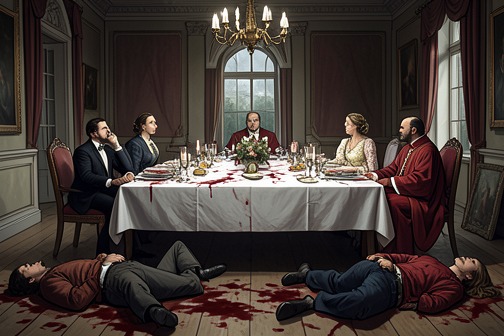
[The Red Wedding](entity:event-recall-event-the-red-wedding-51cd2a2bf94e), also known as the Massacre at the Twins, is the decisive betrayal that destroys the political and military position of the Young Wolf’s cause. In later conversations, it is not treated as an ordinary battle or a legitimate victory, but as a murder committed in breach of sacred hospitality. Its force lies in the way the event turns the language of settlement, marriage, and royal authority into instruments of slaughter, while leaving the survivors to argue over vengeance, honor, and the meaning of peace.
## Causes and Political Setting
The massacre belongs to the wider struggle for the [Iron Throne](entity:location-recall-location-iron-throne-03617e4bcdbd) and the attempt to end the war through alliances and negotiated passage. The aftermath is repeatedly framed through the contrast between formal peace and continuing violence. Jaime Lannister tells Ser [Brynden Tully](entity:character-recall-character-brynden-tully-88cc23545bcc) that the war is over and that the Young Wolf is dead, but Ser Brynden answers that the Young Wolf was murdered in breach of all the sacred laws of hospitality. The exchange establishes the event’s central moral and legal contradiction: a political settlement may declare the conflict finished, yet the manner of the settlement leaves the underlying grievance alive.
The language of hospitality is crucial because the killing occurred under the protection ordinarily associated with a shared meal and a host’s obligations. Ser Brynden refuses to accept Jaime Lannister’s attempt to separate the deed from the Lannister cause by saying that the massacre was the Freys’ work rather than his own. The old knight instead says that it stinks of Tywin Lannister. Responsibility therefore becomes both direct and political: the Freys appear as perpetrators, while the victory is associated with the larger power that benefits from the bloodshed.
The event also exposes the instability of competing legal systems. Succession claims elsewhere in the realm are argued through male-preference succession, [Dornish inheritance law](entity:rule-recall-rule-dornish-inheritance-law-cc92050da43b), precedent, royal command, and religious authority; the massacre adds guest right as another binding norm, one whose violation cannot be erased by a king’s proclamation or a victor’s declaration that the war has ended. Its horror comes from the collision between the public forms of lawful order and the private reality of treachery.
## The Massacre’s Meaning in the Immediate Aftermath
The clearest surviving description of the Red Wedding in the supplied evidence is retrospective rather than a continuous battlefield account. Ser Brynden’s accusation names the defining fact: the Young Wolf and his followers were murdered while relying on sacred hospitality. That distinction separates the event from defeat in open combat. A defeated army may lose because it is outnumbered or outmaneuvered; the victims of the Red Wedding were destroyed because the protections surrounding the gathering were turned against them.
The political consequences are made plain in the treatment of the dead and the survivors. At [Duskendale](entity:location-recall-location-duskendale-9b5ed9f9f1f1), Brienne of Tarth passes a cairn containing the northern dead, “far more numerous” than the forces whose bodies were placed in heroes’ tombs beneath the town’s septs. The victors mark the common grave with the stark words “HERE LIE THE WOLVES.” Brienne stops to pray for those dead, as well as for Catelyn Stark, Robb Stark, and the men who died with them. The marker reduces a vast military catastrophe to a stark public statement, but it also preserves the victims as a collective whose identity is defined by loyalty to the Young Wolf.
That grave creates a deliberate contrast between official burial and communal memory. The westermen, stormlanders, and knights of the Reach commanded by Lord [Randyll Tarly](entity:character-recall-character-randyll-tarly-5da21d33432a) are carried within the walls to rest in honored tombs. The northern dead lie together beside the sea, beneath a rough wooden sign. The difference in burial space records the victors’ power to classify their own dead as heroes while leaving the defeated to be remembered through a phrase that carries both mourning and accusation.
## Survivors, Vengeance, and Continuing Violence
The Red Wedding does not end violence in the riverlands; it changes its form. Reports reaching King’s Landing describe outlaws raiding Saltpans, and some survivors claim that a roaring brute wearing a hound’s head helm was among the attackers. The uncertain reports connect the continuing disorder with [Sandor Clegane](entity:character-recall-character-sandor-clegane-85d242270a34), Beric Dondarrion, and the unstable authority of the postwar riverlands. The event that was supposed to restore the king’s peace instead becomes part of the evidence that peace has not been restored.
The dead also generate a cycle of retaliation. A large man speaking for Lady Stoneheart tells Brienne of Tarth that she wants her son alive or the men who killed him dead. He names Freys and Boltons as the intended victims and says that they will be given to the crows as the Red Wedding’s victims were. The demand is not for reconciliation but for an exchange of bodies. Brienne’s defense of Jaime Lannister—that he saved her from rape, returned for her at the bear pit, and sent her to protect [Sansa Stark](entity:character-recall-character-sansa-stark-8f43c315b38b)—cannot dissolve the command. Lady Stoneheart offers a stark choice: kill the Kingslayer or be hanged as a betrayer.
Later reports show that the vengeance has reached into the Frey family itself. Ryman Frey is hanged with his party two leagues south of Fairmarket after traveling with three knights and a dozen men-at-arms. [Edwyn Frey](entity:character-recall-character-edwyn-frey-59ccb56be3d7) suspects that his brother Black Walder arranged the ambush by allowing the outlaws to escape after they murdered Merrett and Petyr, because with their father dead only Edwyn stands between Black Walder and the Twins. The accusation is not proven, but it reveals how the massacre’s political logic has entered the victorious house: suspicion, inheritance, and fear now turn relatives against one another.
The pursuit also reaches Ser Raynald Westerling, the knight of seashells. When forces move to kill a direwolf, he surrenders his sword but seizes Whalen’s axe after the crossbowmen begin shooting the animal. Wounded by one quarrel in the shoulder and another in the gut, he cuts the direwolf free, reaches the wallwalk, and throws himself into the river, leaving blood on the steps. His fate is presented as part of the same moral aftermath: loyalty survives in gestures of rescue and defiance, while the people responsible for enforcing the new order answer resistance with nets, crossbows, and pursuit.
## Memory, Honor, and Narrative Significance
The Red Wedding endures in the narrative as a test of whether political power can make treachery legitimate by winning. Jaime Lannister’s claim that the war is done is countered by Ser Brynden’s insistence that murder under hospitality cannot be transformed into honorable victory. The dispute is not merely personal. It asks whether peace built through violated obligations is peace at all, and whether a realm can demand obedience from those whose families were destroyed by the very authorities now claiming to govern them.
The event’s memory is carried through recurring images of bodies, graves, and unfinished debts. The wolves’ cairn preserves the defeated as a community. Lady Stoneheart’s demand converts grief into an organized program of revenge. The hanging of Ryman Frey shows that retaliation can strike even those who belong to the winning side. Ser Raynald Westerling’s final attempt to free the direwolf turns resistance into a physical act performed amid blood, weapons, and a collapsing promise of mercy.
For that reason, the Red Wedding is more than a massacre in the chronology of the War of the Five Kings. It is the event that reveals the distance between law as proclamation and law as lived obligation. [Guest right](entity:rule-recall-rule-guest-right-f793ba2e8dbb), family loyalty, military command, and royal peace all claim authority, but none can contain the consequences of betrayal. The wedding’s ritual promise of union is remembered instead as the beginning of a longer season of graves, reprisals, and distrust.
Event 15
Restoration of the Faith Militant
[Restoration of the Faith Militant](entity:event-recall-event-restoration-of-the-fait-69294ce5bde8) is the reconstitution of the armed orders of the [Faith of the Seven](entity:organization-recall-organization-faith-of-the-sev-f2d9270e0110) after centuries of suppression, a transaction that begins as [Cersei Lannister](entity:character-recall-character-cersei-lannister-666bd8aa8550)’s calculated attempt to purchase religious cooperation and ends by placing organized force in the hands of the High Sparrow. By reviving the Warrior’s Sons and [Poor Fellows](entity:organization-recall-organization-poor-fellows-853ae6c9ccf0), the crown trades financial relief and immediate political convenience for a rival jurisdiction whose claims of sacred justice soon reach into the [Red Keep](entity:location-recall-location-red-keep-df1aebb0ddc9) itself.
## Causes and Bargain
The restoration emerges from Cersei’s confrontation with the High Sparrow over the crown’s debts and the authority of the Faith. She suggests that the laws of Maegor could be undone, deliberately testing whether the High Sparrow would accept the return of the militant orders. He responds that the rebirth of the [Faith Militant](entity:organization-recall-organization-faith-militant-60f075b83d8f) would fulfill centuries of prayer: the Warrior would again raise his sword to cleanse the realm, and King Tommen Baratheon would be recognized by every godly man as the true and rightful lord.
Cersei does not present the proposal as an act of devotion. She uses it as leverage. The crown owes the Faith 900,674 dragons, and she asks whether the High Sparrow wants gold or the repeal of Maegor’s laws. He chooses the legal restoration of the orders, forgives the entire debt, and promises Tommen his blessing. Cersei calculates that the arrangement will remove the troublesome sparrows from the streets, secure the king’s religious legitimacy, and reduce the crown’s obligations by nearly a million dragons. The bargain therefore joins sacred language to fiscal expediency: each side believes it is acquiring the instrument needed to control the other.
The episode belongs to a wider pattern of rulers treating institutions, vows, and public rituals as weapons. Cersei had already considered sending a hundred men to the Night’s Watch under the pretext of strengthening the Wall, while secretly intending to remove [Jon Snow](entity:character-recall-character-jon-snow-69260519b1d4) from command. Her preferred method is concealed violence rather than open declaration. The Faith bargain follows the same logic, but its consequence is less controllable: instead of a hidden dagger, Cersei authorizes a public and institutional force that can act in the name of divine law.
## Reconstituted Orders
The restored movement divides into two complementary bodies. The Warrior’s Sons are knights who surrender lands and gold and swear their swords to the High Septon. The Poor Fellows are humbler and far more numerous, wandering the roads to escort travelers from sept to sept and from town to town while carrying axes instead of begging bowls. Their old symbols and appearance mark their distance from ordinary royal power: the Poor Fellows bear the seven-pointed star, while the Warrior’s Sons wear rainbow cloaks, inlaid silver armor over hair shirts, and star-shaped crystals in the pommels of their longswords.
These orders are remembered as ascetic, fanatical, and implacable toward enemies of the Faith. Stories describe their members as holy men, sorcerers, dragonslayers, and demonhunters, though the range of those legends does not make them less politically dangerous. The restoration gives those inherited images a current institutional form. What had survived as religious memory becomes armed presence, recognizable in the streets through seven-colored swordbelts, crystal-decorated weapons, and kite shields displaying a rainbow sword shining on a field of darkness.
The movement grows rapidly. When the Faith’s delegation appears in King’s Landing, six Warrior’s Sons escort Septon Raynard, making seven in accordance with the High Sparrow’s devotion to the number. [Qyburn](entity:character-recall-character-qyburn-d45b5b72033e) reports that nearly a hundred knights have already pledged their lives and swords, with more arriving every day. Most are household knights or hedge knights, but the ranks also include younger sons, petty lords, and old men seeking atonement for earlier sins. Lancel Lannister’s presence makes the transformation especially personal for Cersei: he has abandoned his castle, lands, and wife to join the order, turning a family relation into evidence that the revival has entered the heart of the court.
## Expansion and Immediate Power
The restoration changes the balance between crown and Faith at once. The High Sparrow’s followers are no longer merely a crowd of penitents or poor preachers whom the queen can dismiss. They possess knights capable of guarding septs and enforcing religious claims, while the Poor Fellows can move along the roads and reach the smallfolk beyond the capital. Cersei initially imagines that this force will help her manage unrest and cleanse the city of the sparrows she regards as a plague.
Her confidence is already compromised by the orders’ moral intrusion into ordinary government. Septon Raynard defends the High Sparrow’s campaign against prostitution by invoking the purpose of the bodies created by the Father and Mother, calling the sale of sexual services sinful. Cersei answers in economic and civic terms: brothels feed the royal coffers, help pay the gold cloaks, support the construction of galleys, preserve trade, and prevent common men deprived of prostitutes from turning to rape. The exchange exposes the central conflict within the restoration. The Faith defines order through chastity and punishment; the queen defines it through revenue, commerce, and controlled vice. The armed revival gives the religious definition a means to compete with the royal one.
The restoration also functions as a ritual reauthorization. Ancient names, badges, cloaks, crystals, and vows are not decorative survivals; they claim that the present is returning to a sacred and legitimate past. The High Sparrow presents the revived orders as an answer to three hundred years of prayer, while Cersei treats the same return as a transaction. That contrast makes the event more than a military reform. It is a struggle over whether authority comes from inherited law, royal seal, popular piety, or the Faith’s own declaration of righteousness.
## Conflict with the Crown
The queen’s assumption that she can direct the restored Faith proves false. When a crowd gathers outside the sept demanding the release of the little queen, Cersei refuses to disperse it, believing that shouting will not sway the High Sparrow because he listens only to the gods. She notes the irony that an angry mob now surrounds the man whom a mob had raised to the crystal crown, only for him to sell that crown. Yet her response reveals the new constitutional reality: she orders the city gates closed, but leaves the sept’s defense to the Faith’s own knights.
The consequences become harsher when the High Sparrow confronts the queen over [Osney Kettleblack](entity:character-recall-character-osney-kettleblack-052bc686f1a2). Cersei insists that the Faith has no right to condemn a man to death, but the High Sparrow rejects the distinction between religious judgment and criminal punishment. He declares Osney guilty of treason and murder and says that crimes must still be punished even when sins may be forgiven. The restored institution thus claims the authority to investigate, judge, and impose death, directly contradicting Cersei’s belief that it remains merely a priestly body under royal control.
Osney’s altered testimony intensifies the reversal. Under torture, his alleged offenses appear to change, and he now denies touching [Margaery Tyrell](entity:character-recall-character-margaery-tyrell-d3cc06ed6ac6). When he sees Cersei, he reminds her that she promised him the Wall. His plea exposes the gap between the queen’s covert schemes and the Faith’s public proceedings: the very man Cersei used as an instrument becomes evidence against her, while the militant order supplies the coercive setting in which his account acquires political force.
## Consequences and Significance
The restoration produces an armed religious power whose legitimacy rests on both ancient precedent and immediate popular devotion. It promises protection for travelers, moral purification for the realm, and a renewed connection between kingship and the Faith. Yet the event’s political structure is unstable from the beginning. Cersei wants a dependent ally, while the High Sparrow accepts the crown’s money only by demanding the restoration of an institution that can operate according to its own sacred standards.
Its deepest irony is that Cersei succeeds in the short term precisely by empowering the force that defeats her control. She secures forgiveness of 900,674 dragons, gains Tommen’s blessing, and believes she has solved several problems at one stroke. The restored orders then become visible throughout King’s Landing, attract knights from many social ranks, police religious morality, defend the sept, and participate in the prosecution of the queen’s agents. The political bargain therefore reverses its original direction: what begins as royal management becomes institutional rivalry.
The event also echoes other transformations in which ritual claims to death and renewal authorize new power. [Aeron Greyjoy](entity:character-recall-character-aeron-greyjoy-45b88728897f) revives Emmond through the kiss of life and teaches that what is dead rises again harder and stronger; he summons the ironborn to a kingsmoot at the sacred bones of the Grey King’s Hall so that the Old Way may return. The wedding of Tommen and Margaery similarly uses an old ceremony to stabilize a changed political order, though its scale is deliberately reduced after Joffrey’s lavish nuptials. The Faith Militant restoration belongs to this same pattern of resurrection, but with a darker institutional result: the past is not merely remembered or ceremonially repeated. It returns armed, claims jurisdiction, and makes the supposed sovereign answer before it.
Event 16
Cersei Lannister’s Arrest
[Cersei Lannister’s Arrest](entity:event-recall-event-cersei-lannister-s-arre-fc1ac8067b31) marks the violent transfer of power from the queen’s secular court to the Faith. Cersei enters the confrontation believing that rank, guards, and carefully arranged political violence can still protect her; she leaves it imprisoned, publicly discredited, and awaiting judgment by a holy court. The arrest is therefore not merely a detention but a reversal of the authority on which her regency rests.
## Causes and Background
The immediate cause is the High Sparrow’s interrogation of [Osney Kettleblack](entity:character-recall-character-osney-kettleblack-052bc686f1a2). Cersei had relied on Osney as an instrument of her policy, but the Faith’s punishment changes the testimony on which her plans depend. The High Sparrow observes that the more diligently Osney is scourged, the more his alleged offenses seem to change, undermining the queen’s confidence that the confession will continue to serve her purposes.
Under direct questioning, Osney confirms that he had sexual relations with [Margaery Tyrell](entity:character-recall-character-margaery-tyrell-d3cc06ed6ac6) and identifies Cersei as the queen who sent him to murder the old High Septon. He describes entering while the High Septon slept and suffocating him with a pillow. The accusation exposes two connected crimes: Cersei’s alleged adultery and her use of murder as a political tool. It also turns a servant of her conspiracy into the witness against her.
The arrest follows a broader contest over who may exercise coercive authority in King’s Landing. Cersei had already shown her preference for concealed violence when she approved [Qyburn](entity:character-recall-character-qyburn-d45b5b72033e)’s proposal to send a hundred men to the Wall ostensibly to reinforce the Night’s Watch, but in truth to remove [Jon Snow](entity:character-recall-character-jon-snow-69260519b1d4) from command. She called the dagger preferable to an open declaration. The same logic now recoils upon her: the hidden weapon of conspiracy becomes the evidence that strips her of protection.
## What Happens
When Osney’s confession is spoken, Cersei does not remain to argue her case. She whirls and runs. The High Septon tries to seize her, but she pushes him aside and bursts through the door. Her flight immediately becomes a desperate attempt to recover the network that had sustained her. She thinks of sending Osfryd with the gold cloaks and Osmund with the [Kingsguard](entity:organization-recall-organization-kingsguard-d091a203796c), believing that Osney could be freed and made to deny everything. She also remembers [Taena Merryweather](entity:character-recall-character-taena-merryweather-fa3168db96bf), whose knowledge might expose still more of her actions.
Cersei reaches the sept but cannot escape it. Septas and silent sisters wait for her, and her declaration that she is the queen has no effect. She threatens them with execution and invokes Jaime Lannister’s violence on her behalf, yet the women lay hands upon her. At the altar of the Mother, a group of them catches and drags her up the tower steps. The architectural movement is a descent in status disguised as an ascent through the sept: the queen passes from public authority into an enclosed religious space where her title can no longer command obedience.
Inside the cell, three silent sisters hold Cersei down while Septa Scolera strips her bare, including her smallclothes, and gives her only a roughspun shift. Cersei continues to insist that she is a Lannister and the queen, calling upon Jaime to cut down those who restrain her. Septa Scolera answers that the queen should pray, reducing royal identity to a condition of judgment and penitence.
Cersei refuses the humility expected of her. She tears the shift into a hundred pieces, smashes the ewer against the wall, breaks the chamber pot, and pounds on the door. She assumes that the ten Lannister guardsmen and Ser Boros Blount waiting below will hear her and free her, after which she imagines dragging the High Sparrow back to the [Red Keep](entity:location-recall-location-red-keep-df1aebb0ddc9) in chains. The destruction of the cell is both resistance and evidence of her continuing misjudgment: even after confinement, she still interprets power as something her household must be able to restore on command.
## Reversal of Power
No rescue comes. Cersei hears shouting from the plaza, but the crowd calls for Margaery Tyrell rather than for her. This contrast makes her isolation unmistakable. Margaery’s popularity has become a public force, while Cersei’s authority has narrowed to private expectation and threats that no longer produce action.
Near dawn on the second day, Lord Qyburn enters her cell. Cersei is relieved to see him and asks him to take her home, treating his arrival as the first sign that her political world may still function. Instead, Qyburn tells her that she will not be released. She is to be tried before a holy court of seven for murder, treason, and fornication.
The announcement converts the earlier confession into formal consequence. The Faith does not merely accuse Cersei; it establishes a judicial process capable of overriding the queen’s own understanding of jurisdiction. Her objection that the Faith should not condemn a man to death has already failed in the case of Osney Kettleblack, whom the High Septon declares guilty of treason and murder. The same religious authority that Cersei regarded as an obstacle now defines the terms of her captivity.
## Consequences and Aftermath
The arrest leaves Cersei physically separated from the Red Keep and politically separated from the instruments she trusted. Her first concern after hearing of the trial is Tommen Baratheon: she asks whether he remains king. Qyburn assures her that Tommen is safe inside Maegor’s Holdfast under the protection of the Kingsguard, though he is lonely and asks for both his mother and his little queen. Even this reassurance emphasizes Cersei’s loss. Her son retains the crown, but she no longer controls the immediate space around him.
The event also exposes the fragility of the queen’s method. Cersei had attempted to govern through appointments, threats, covert murder, and the manipulation of confessions. Yet her own agent’s testimony, the Faith’s discipline, and the refusal of her expected rescuers combine into a single reversal. The woman who had ordered the city gates closed so that no one could enter or leave King’s Landing without her permission now discovers that she cannot leave a cell herself.
## Narrative Significance
The arrest is structured as a passage through competing rituals of authority. The Faith’s scourging produces testimony, the confinement strips away symbols of rank, and the promised holy court threatens to replace royal command with religious judgment. In contrast to the royal wedding of Tommen Baratheon and Margaery Tyrell, a ceremony conducted in the Red Keep’s royal sept before fewer than a hundred guests, Cersei’s imprisonment turns the same religious sphere into a site where the queen is exposed rather than celebrated.
Its deepest irony lies in Cersei’s conviction that every enemy should be handled with a dagger rather than a declaration. That maxim has governed her attempts to remove rivals, including Jon Snow and the old High Septon, but Osney’s confession makes concealed violence speak aloud. The arrest therefore functions as both plot reversal and moral exposure: Cersei is not defeated by a stronger battlefield force, but by the testimony, institutions, and consequences generated by the covert power she considered safest.